

Reforming EU Consumer Dispute Resolution for the Digital Age
By: Dori Felber, Read time: 3min

The European Union faces growing pressure to ensure that consumers can resolve disputes fairly and efficiently in an increasingly digital and borderless marketplace. The proliferation of digital services, online transactions, and cross-border purchases has made it difficult for traditional redress methods to keep up with economic and technological advancements. Once hailed as a practical link between consumers and justice, Alternative Dispute Resolution (ADR) is currently at a turning point. The EU's upcoming ADR framework reform is an ambitious attempt to adjust to a data-driven, global economy while also acknowledging past errors. In light of this, the European Commission's legislative push is part of a larger attempt to restore consumer confidence and regulatory relevance in the digital era, rather than merely updating existing policies.
The European Union is preparing to overhaul its system of Alternative Dispute Resolution (ADR), marking a crucial step toward modernising consumer protection for the digital era. A 2025 briefing from the European Parliamentary Research Service (EPRS) on Directive 2013/11/EU highlights the Commission’s proposal to adapt ADR to contemporary market dynamics, cross-border e-commerce, digital content, and global platform economies.
When first introduced in 2013, the ADR Directive was celebrated as a cornerstone of accessible justice, offering consumers an alternative to lengthy and costly court procedures. Yet more than a decade later, its promise remains largely unfulfilled. Only about 5% of consumers who encounter problems turn to ADR because limited awareness, uneven trader participation, and procedural complexity have undermined the system’s credibility. The framework also predates the explosion of digital trade, leaving unresolved how consumers can seek redress for disputes involving digital services or non-EU traders.
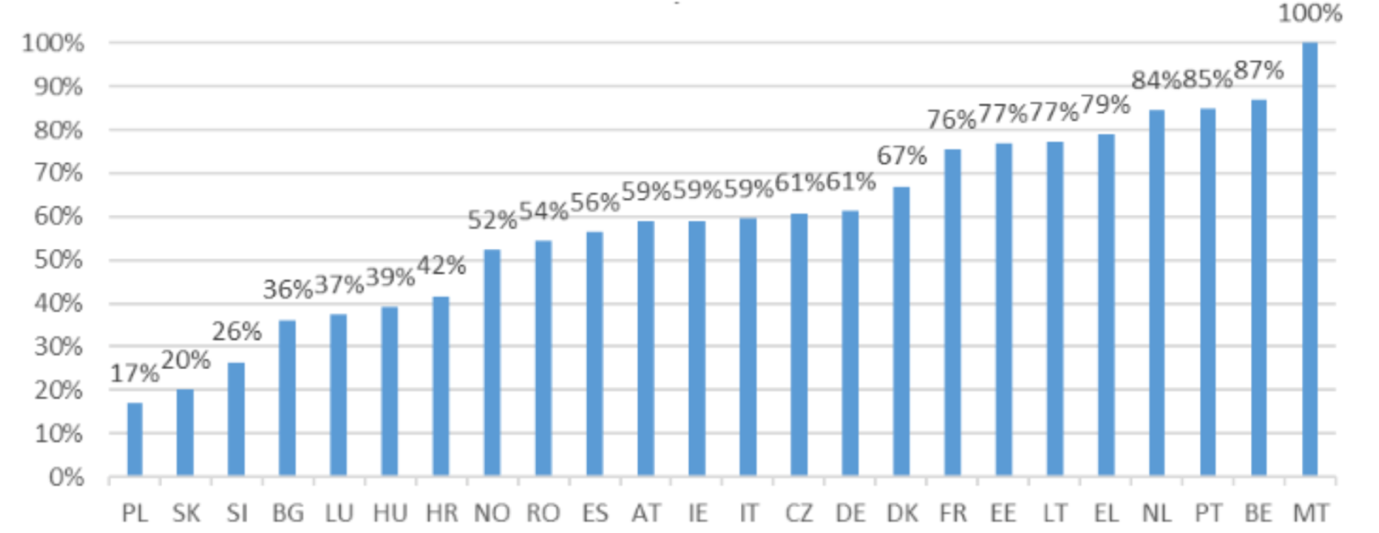
Source: Data collection study: Data for 3 Member States only covered some of the years: BE (based on 2018-2021 data), FR (based on 2019 and 2020 data), and RO (based on 2018-2020 data), Report on the application of Directive 2013/11/EU on alternative dispute resolution for consumer disputes, European Commission, 2023.
The Commission’s 2023 legislative proposal tackles these deficiencies through a sweeping reform. It amends four key directives, on ADR, package travel, consumer enforcement, and representative actions, while repealing the ineffective Online Dispute Resolution (ODR) Regulation. The reform’s aims are clear: make ADR fit for digital markets, boost engagement by consumers and traders, and streamline cross-border resolution procedures.
Expanding Scope and Digitalising Access
The proposal’s most striking feature is its expanded scope. ADR will no longer be confined to contractual disputes but will also cover pre-contractual and non-contractual issues, such as misleading advertising or defective digital products. Moreover, it extends EU consumer protection to transactions involving non-EU traders, asserting the Union’s regulatory reach beyond its borders.
Digitalisation lies at the heart of the reform. New online tools, translation services, and shared data interfaces aim to make ADR faster and more interoperable across Member States. Where automated decision-making is used, consumers must be informed and retain the right to human review, reflecting the EU’s commitment to fairness and transparency in AI-driven systems.
A Test of the EU’s Regulatory Credibility
If successfully implemented, the reform could significantly reduce litigation, improve access to justice, and strengthen trust in the single market. However, its effectiveness will depend on trader participation, enforcement mechanisms for non-EU operators, and sustained consumer awareness.
More than a technical revision, the ADR reform reflects the EU’s ambition to modernise governance through technology without compromising rights. By embedding transparency and digital safeguards into dispute resolution, the Union seeks to transform ADR from a peripheral tool into a central pillar of fair and efficient market regulation.
The reform of the EU’s Alternative Dispute Resolution framework stands as a defining test of the Union’s ability to reconcile technological progress with consumer rights. By extending protection to digital and cross-border transactions, the proposal recognises how profoundly commerce has evolved since 2013 and how urgently policy must evolve with it. Yet the success of this reform will not rest solely on legislative precision but on public trust. Consumers must know that ADR works, and traders must see value in participating. If these conditions are met, the new system could become a cornerstone of accessible justice in the digital age, reinforcing the EU’s credibility as a global standard-setter for fair, transparent, and technology-enabled market regulation.