

Part II: From the EU to the world: a journey through the legal bases, historical developments and the current state of EU external action and strategies
By: Antonio Manuel Torres García, Reading time: 10 min
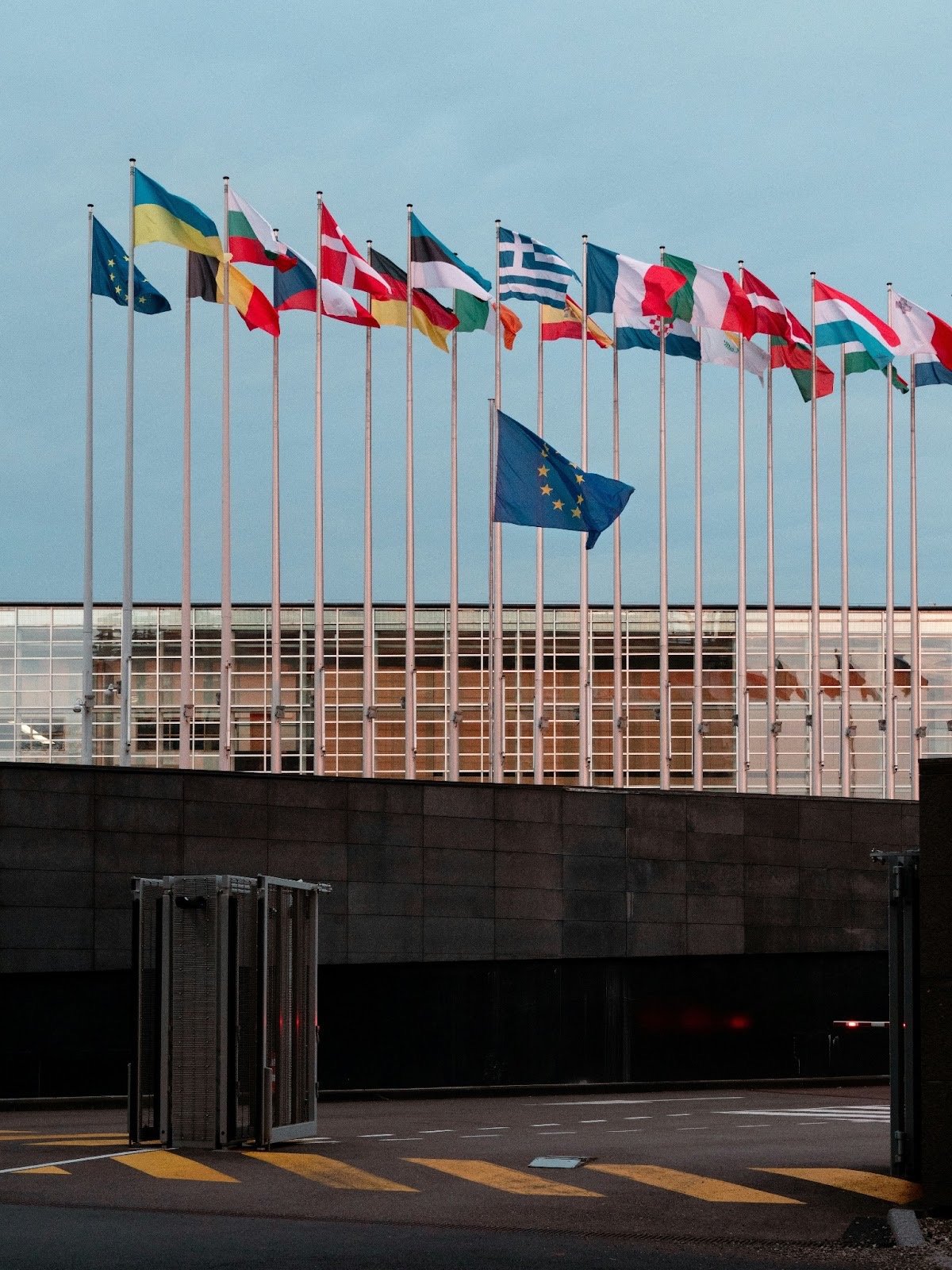
The European Union (EU) is oftentimes viewed as an entity that works for the betterment of its members, and while this is largely true, taking into consideration its objectives, values, competences, and means of action, it is nonetheless a narrow view of the wider action the EU undertakes in a more general scene. The position the EU takes when engaging with foreign agents varies according to mutual interests, feasibility, likelihood, and overall net benefit on both sides. But while trade agreements and economic partnership agreements (EPAs) fall within the external action competences the EU enjoys and tend to take the spotlight, they are not the only scenarios in which the EU engages with other states. Separate from the nascent state of a common European defence policy, which represents another facet of the EU action with external effects, European strategies like the Global Gateway mount up to projects comprising initiatives with the aim of tackling the world’s most pressing global challenges; a project that unavoidably carries an explicit “global” approach.
This entry represents the second part of the full article. In the first part, which you can easily find on the web under the same title, we dove into the legal basis that allows the EU to carry out specific external actions, in order to understand their relevance. This section carries a different purpose, encompassing firstly a revision of the historical development of EU external actions and overall strategies and, secondly, a consideration of the most recent initiatives, with a view on the shifts they may represent in the grander scheme of things.
The EU external action through the years
The post-colonial birth of EU development cooperation (1957-1975)
The EU’s precursor (the European Economic Community, or EEC) had its first external relations shaped by the colonial ties of several Member States. It is relevant to consider that, even early in its conception, the Treaty of Rome (in its Part IV) covered the association with Overseas Countries and Territories (OCTs), which is still a field of action today. It also covered the creation of the European Development Fund (EDF), which is the predecessor of the modern development instruments, and some early association conventions (Yaoundé Conventions I and II), very relevant in the relations of the EEC with third countries. This first model, however, is one tied to former colonies, not yet global.
The Lomé Conventions (1975-2000)
The most notable examples of the following period are the Lomé Conventions, which introduced a unique and highly ambitious framework with states in Africa, the Caribbean, and the Pacific (ACP) characterised by non-reciprocal trade preferences, a decisive factor in aiding economic development. These Conventions also encompassed a major expansion of EDF volumes, institutionalised political dialogue, and stabilisation schemes (STABEX, SYSMIN). In general, and even before the formal legal bases of development cooperation became explicit in the Treaties, the EU started to behave like a development actor. It can be argued that these conventions influenced the later Article 208 TFEU in substance, and they were relevant in the sense that it now included more countries (46 ACP countries for the first, and 58 in the second iteration) in comparison to the Yaoundé Conventions.
However, it isn’t until the Treaty of Maastricht (1992) that these matters are finally inserted into the Treaties as an explicit EU competence with the predecessors to Articles 208-211 TFEU. It established the primary objective of poverty reduction and the requirement that EU and Member State policies complement each other, representing the beginnings of coherence obligations (anticipating Art. 21 TEU).
The Cotonou Agreement (2000-2020)
Cotonou updates the Lomé model and becomes the legal backbone for development action for two decades. It represented a shift from pure partnership to political conditionality (democracy, rule of law, human rights). We also see the introduction of EPAs and broader and more flexible use of EDF resources, of which it serves as its basis. The Cotonou Agreement, therefore, provided guidance for what would later become Article 21 TEU, while also shaping not only funding but values and conditionality, central to Articles 3(5) and 21 TEU.
Lisbon Treaty (2009)
Picking up where we left off in the legal basis section, there are a few important elements to mention. Firstly, the creation of the European External Action Service (EEAS); secondly, the High Representative’s dual role (Council/Commission); and thirdly, the legal personality for the Union (Article 47 TEU). The CFSP remains intergovernmental, as devised in Maastricht, but development cooperation becomes more coherent. Relevant to consider regarding Lisbon is that it brings together diplomacy and development under one roof, and provides a stronger consistency requirement between internal/external policies. This sets the stage for contemporary external action.
Present’s direct predecessors (2014-2020)
The period encompassing 2014-2020 is one of fragmentation and crisis reaction. Multiple instruments saw the light of day (the Development Cooperation Instrument, the European Neighbourhood Instrument, just to mention a few), contributing to the increased complexity of the EU’s external action, which had been straightforward in comparison. It is also notable that the rise of “crisis-driven” tools, such as the EU Trust Funds (for Syria, Africa, Central African Republic), the creation of the Facility for Refugees in Turkey, and the first European Fund for Sustainable Development (EFSD) is taking place. These situations prompted a growing security-development reciprocal relation that anticipates to an extent the next section: today’s Global Europe.
The 2021 Reform: NDICI-Global Europe and the turn to geopolitics
In the present decade, we have witnessed the consolidation of all the main instruments for external action into the Neighbourhood, Development and International Cooperation Instrument - Global Europe (NDICI - Global Europe), which aims to contribute to the attainment of the objectives agreed upon by the Union, such as the 2030 Agenda and its Sustainable Development Goals, and the Paris Agreement. It is worth noting as well the integration of the EDF into the EU budget and the creation of European Fund for Sustainable Development Plus (EFSD+), a massive investment arm. These steps included a move towards “Team Europe”, and a more strategic, geopolitical framing. In parallel, we see the rise of the European Peace Facility, off-budget and CFSP-related.
The NDICI - Global Europe, established by Regulation (EU) 2021/947, is the central EU funding instrument for relations with third countries in a context of development aid. Framed in the Multi-annual Financial Framework (MFF 2021-2027, which sets the overall ceilings for external spending, it includes geographic programs covering Sub-Saharan Africa, Asia and the Pacific, the Americas and the Caribbean, and countries in the Neighbourhood area, following thematic programs such as human rights and democracy, civil society, peace, stability and conflict prevention, and global challenges (health, climate, education). The NDICI replaces the myriad of instruments previously established in the period from 2014-2020, unifying external action by covering all relevant fields of action and geographical areas under the umbrella of the EU’s values and objectives, which are oftentimes given expression through non-binding instruments like the European Consensus on Development (2017), the EU Global Strategy (2016), and the European Green Deal (2021).
Other non-binding acts, such as the EU Humanitarian Aid Consensus (2007), guide the area of humanitarian aid. This is put into practice by the Council Regulation (EC) No 1257/96 (as amended), which breathes life into the European Civil Protection and Humanitarian Aid Operations (ECHO), alongside the previously mentioned EPF (Council Decision (CFSP) 2021/509), which funds military assistance and peace support operations in third countries.
Another important part of the recent EU’s shift towards a more unified, expansive, and conditionality-riddled external action is the international agreements governing funding. These also have the force of law and guide EU development funding relationships. In this context, the post-Cotonou agreement (2021) serves as a good example. Successor to the previous Cotonou Agreement, it governs relations with the ACP states more detailedly and binds political, economic, and development cooperation.
So, what can we make up of all this?
Barely a week ago, the EU and the African Union (AU) celebrated their annual summit, this time commemorating the 25th anniversary of their partnership, and signifying the most recent iteration of EU external action. And it’s been quite the ride: the EU first underwent a transformation from post-colonial legacy to self-aware global actor. The EU did not start as a global actor; it became one. Similarly, it went from a partnership rhetoric to conditionality and governance export, shifting from a preferential trade-based partnership model to one marked by political conditionality and the projection of internal commitments. Values once understood as guiding principles internally have gradually become operational instruments externally.
Furthermore, it went from fragmented instruments to consolidation and geopolitics. The creation of the NDICI - Global Europe and EFSD+ is not merely administrative simplification, it represents the EU’s attempt to act with geopolitical coherence in a competitive international environment. The NDICI is more than a budgetary decision. And this is important: the boundary between development cooperation and foreign policy has become increasingly difficult to separate. Once conceived as solidarity, it is now mixed with economic influence, migration management, security concerns, and strategic investments: development, trade, diplomacy, and security now operate in a shared ecosystem.
The EU’s journey in external action also reflects a rebalancing between Member State-driven action and Union-level action. While CFSP retains its intergovernmental character, development cooperation, humanitarian aid, and investment have become increasingly “EU-owned”. Whether this represents genuine transformation or a rebranding of long-standing approaches remains open to interpretation.
All in all, we can say that the evolution of the EU’s external action is marked by a tension between the Union’s commitment to its foundational values and the pragmatic demands of international politics. It is in managing this coexistence of values and interests that the EU cements its international presence and articulates its actions.