

Albania Takes the Spotlight! - The History and Progress of Albania’s Accession to the EU
By: Gabriel Panza Read time: 4 Minutes
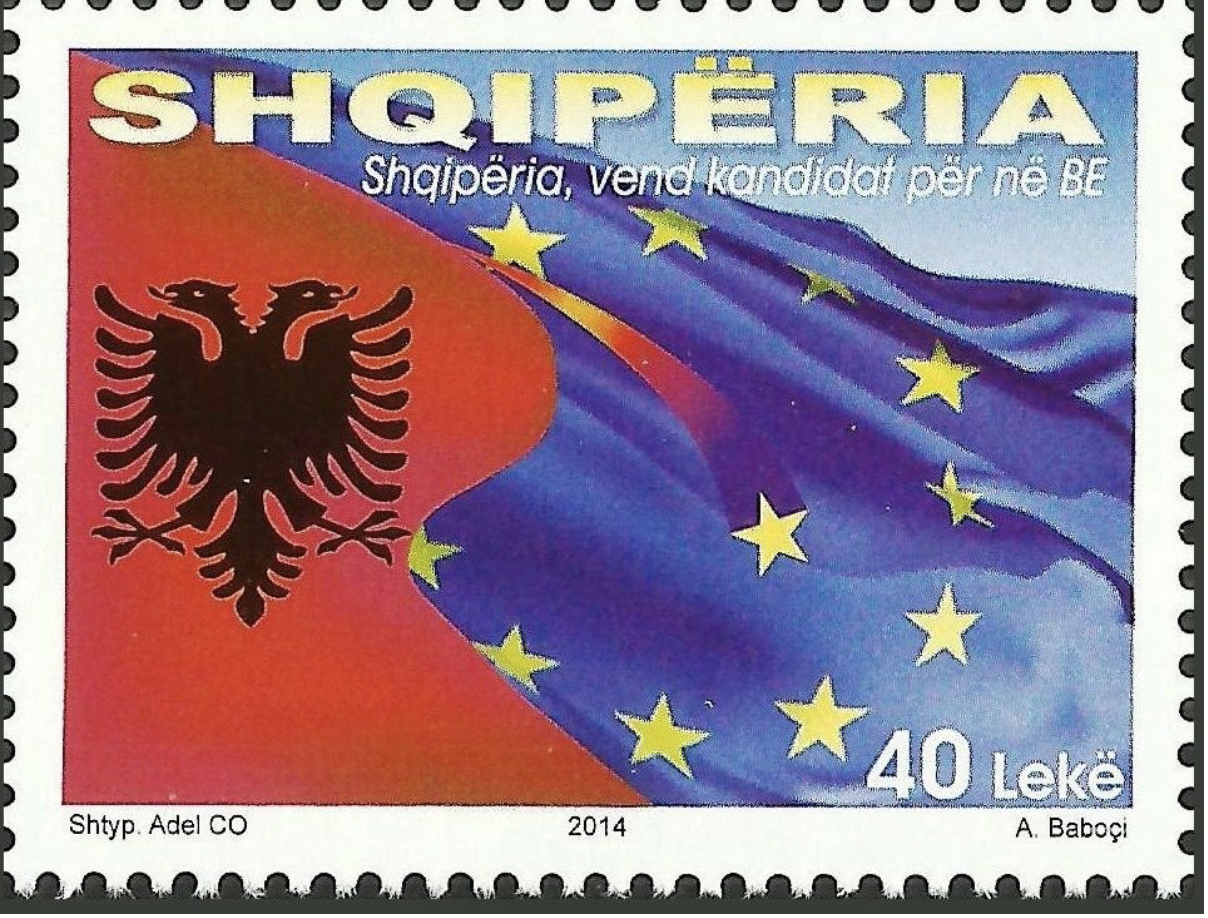
Credit: Post of Albania, Public domain, via Wikimedia Commons
The Balkan country, Albania, known for its cultural tradition of “Besa” and its stunning coastlines, has recently come into the spotlight with its progress towards EU accession. Recently, on November 17th, Albania opened its final cluster of topics needed for EU membership negotiations, covering agriculture and fisheries, food safety, and cohesion policy. This marks a significant step towards Albania’s eventual accession, as accession talks are expected to end by the end of 2027. Prime Minister Edi Rama has claimed that Albania’s accession will be completed by 2030, a claim initially met with skepticism. However, given that EU negotiation processes have gone swimmingly, Albania’s goal of accession by 2030 appears increasingly likely. But what is the history of Albania’s accession to the EU? And what kind of relationship has Albania fostered with the EU?
Historical development leading to accession
The EU and Albania first established a partnership back in 2004. In 2009, Albania applied for EU membership. Later in 2010, the European Commission issued its opinion on Albania’s membership application. In this opinion, the Commission stated that, before negotiations could begin, Albania still had to meet specific membership criteria. More specifically, the Commission identified 12 priorities, including ensuring the rule of law, protection of minorities, and fostering a functioning market economy. In 2012, the Commission recommended that Albania be granted candidate status, a title which was then granted in 2014. Albania’s relations with the EU were on the rise when its candidacy was coupled with that of North Macedonia, making both states promising for accession. The Commission reiterated its position in 2018 by recommending that open accession negotiations begin.
In 2020, after adopting a revised methodology for accession negotiations, negotiation chapters were categorized into six different clusters:
Fundamental rights and freedoms
Internal market
Competitiveness and inclusive growth
Green agenda and sustainable connectivity
Resources, agriculture, and cohesion
External relations
Before negotiations for these clusters could take place, the EU decoupled Albania and North Macedonia’s accession procedures. This would allow Albania to continue its accession independently. But what caused this sudden change? The answer is the so-called “French Proposal” put forth by the EU’s then-French presidency, which recommended that North Macedonia should change its constitution. Since the government in Skopje has changed and the country’s parliament has yet to approve the alteration, this has naturally led to a halt in its accession procedure.
Albania opened its first cluster of talks in October 2024, covering the judiciary and fundamental rights and freedoms. Progressively throughout the following year, the remaining cluster topics were discussed in the ascension negotiations, culminating in the most recent one in November 2025. This process was effectively completed in around one year, exemplifying the efficiency of the EU accession process.
EU relations with Albania
Currently, the EU and Albania seem to foster good relations, with Commissioner Marta Kos stating that “Albania is the best example of the transformative power of enlargement.” All Balkan countries have a ‘stabilization and association process’ that establishes the overall framework for relations between the Balkan states and the EU. Albania has ratified its stabilization and association agreement, which has run concurrently with the accession negotiations. Regarding migration, the EU and Albania collaborate through border cooperation agreements implemented by the European Border and Coast Guard Agency (Frontex). Such an agreement allows Albania and Frontex to conduct border checks and register citizens crossing the border in a coordinated effort. Moreover, the European Peace Facility collaborates with the Albanian armed forces to prevent potential conflict and enable Albania to participate in EU security and defence operations. Albania’s cooperation with both Frontex and the European Peace Facility reflects its commitment to align with the EU’s core values.
Has the EU convinced Albanian citizens?
Tirana is reported to have the highest level of public support for EU accession among the current candidate countries, with around 90% of Tirana’s citizens in favor. Among the Balkan states, Albania is reported to be the most supportive of EU integration, with an astounding 82% of its citizens viewing the EU positively. Most of this support stems from the belief that EU support can result in economic development and reduce corruption in Albania. Furthermore, citizens have stated in surveys that they expect an increase in quality of life and the opening of borders.
Overall, the signs point to Albania eventually acceding to the EU. It’s simply a matter of time. Albania may exemplify the effective process of EU accession, demonstrating that the EU genuinely seeks to integrate fundamental values into its candidate countries. This is seen in the EU’s recommendations to Albania to incorporate the 12 priorities in 2009, and later in the negotiations on the revised methodology on accession negotiations. The opening of the final cluster marks a significant milestone in Albania’s history and highlights how deeply Albania’s political trajectory is now intertwined with the EU’s values.