

The Western Balkans and the Price of Delay
by Margaux Baudry, reading time 4 min
In the Western Balkans, EU enlargement is often discussed as a distant political process. But this spring, it became much more tangible: millions of euros for schools, innovation, transport, and energy projects started arriving in the region. And one country was missing from the list…
On May 20th, the European Commission released €158.9 million to Albania, Montenegro and North Macedonia under the EU Growth Plan for the Western Balkans. The funding is meant to accelerate reforms and deliver practical improvements in everyday life, including cleaner transport systems, renewable energy projects, stronger digital infrastructure, and investment in education and skills. For citizens across the region, this is what enlargement looks like before accession.
Turning reforms into investment
The Growth Plan, adopted by the EU in 2023, was designed around a simple idea: Western Balkan partners should not have to wait for formal EU membership to begin experiencing some of its economic benefits. It aims to bring the region closer to the EU Single Market, deepen regional economic cooperation, and reward reform efforts with increased financial support. Backed by a €6 billion Reform and Growth Facility, the plan ties funding directly to progress. This latest disbursement reflects reforms completed by the end of 2025.
Albania received €49 million, with support tied to reforms improving the business climate, boosting investment and innovation, and expanding access to finance, particularly for start-ups and companies in green and digital sectors.
Montenegro was allocated €44.2 million, with reforms focused on research and innovation, including support for scientists, businesses, and research institutions.
North Macedonia received €65.7 million, aimed in part at improving funding for primary and secondary education while expanding digital infrastructure and IT equipment in schools.
Part of the funding goes directly into national budgets, while the rest is channelled through the Western Balkans Investment Framework (WBIF) to finance larger investment projects across transport, energy, digitalization and human capital. EU Enlargement Commissioner Marta Kos described the progress as proof that reforms can deliver “visible benefits for citizens”.
Bosnia and Herzegovina
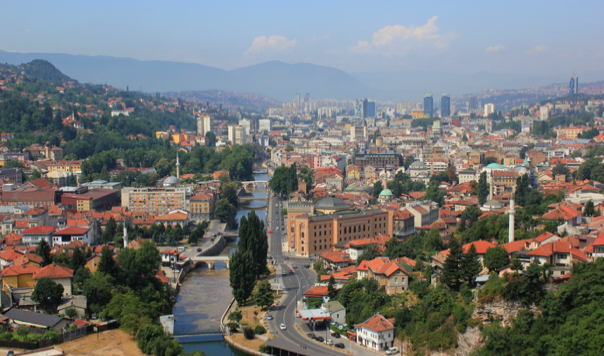
Yet while neighboring countries are moving ahead, Bosnia and Herzegovina remains the only country in the Western Balkans that has not drawn a single euro from the facility. Its potential allocation, nearly €976.5 million, remains frozen. And the reason is not a lack of funding, but a lack of agreement.
Bosnia and Herzegovina has still not finalized the required Agreement on the Instrument of Reforms and Growth, which is the legal condition needed to trigger payments. Political disagreements within the ruling coalition, including disputes over the nomination of a national program coordinator, have blocked progress. As a result, delays are becoming expensive. According to EU officials, Bosnia and Herzegovina has already missed out on €108 million, with hundreds of millions more potentially at risk if the deadlock continues.
More than an EU cheque
The Growth Plan is often framed in financial terms, but its purpose goes beyond funding. The EU sees it as a way to close the economic gap between the Western Balkans and the rest of Europe. Today, the region’s economies average roughly 35% of the EU average GPA per capita. If fully implemented, the plan could significantly increase growth over the next ten years.
The funding itself combines grants and highly favorable loans. Around €280 million of Bosnia and Herzegovina’s allocation would be non-repayable. The loan portion comes with repayment periods of up to 40 years, delayed principal payments, and interest rates far below market levels.
But the bigger opportunity lies in what the money enables: better infrastructure, stronger institutions, more competitive businesses, and faster economic integration with Europe. This includes potential access to SEPA, the Single Euro Payments Area, which would make cross-border money transfers cheaper and faster for businesses and citizens alike.
A regional opportunity and a political test
The EU’s message is increasingly clear: reforms are being rewarded now, not later. For Albania, Montenegro and North Macedonia, the latest payments show that progress can translate into immediate investment. Roads get built. Schools receive equipment. Businesses access financing. Citizens feel the difference.
For Bosnia and Herzegovina, the Growth Plan has become something else: a political test. Can the country’s institutions move fast enough to seize an opportunity that may not stay open forever? The EU has repeatedly said that the door remains open. But doors do not stay open indefinitely. For the Western Balkans, enlargement is no longer only about joining Europe someday. It is also about deciding who is ready to move closer to it today.