

Are European political ‘firewalls’ really as weak as they seem?
By: Saul Gunning
Reading time: 3 minutes
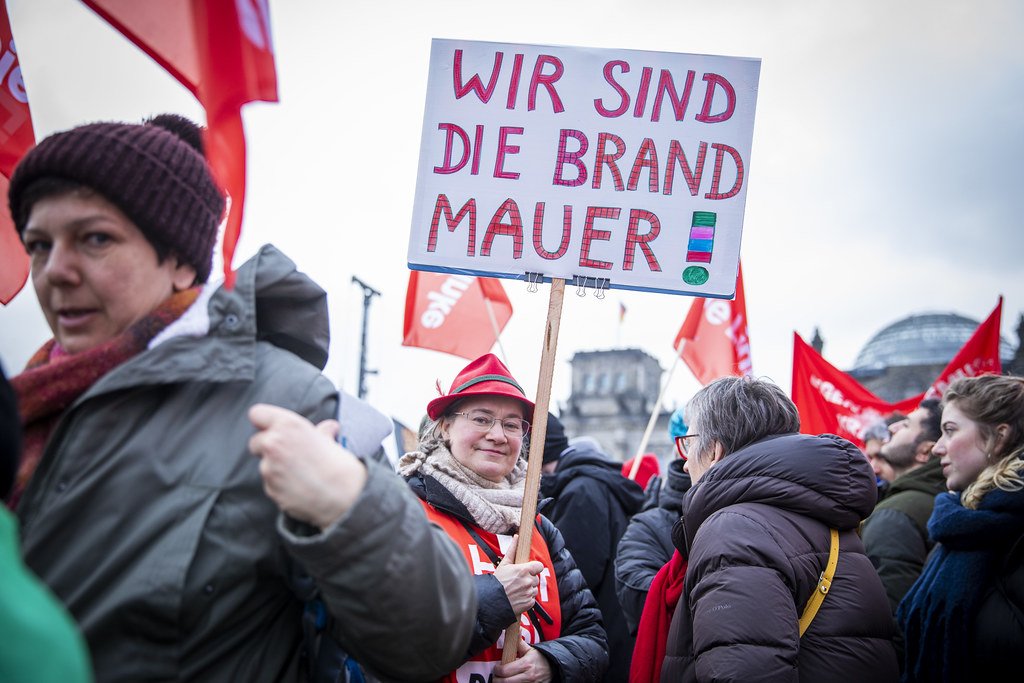
The rising tide of right-wing populist parties across the continent and the apparent ineffectiveness of the strategies deployed to combat them have led to a pervasive conventional wisdom that it is only a matter of time before the firewalls are dismantled or broken through by insurgent political movements such as Alternative für Deutschland or Rassemblement national in France.
Recent Examples: How walls tend to disappear
This trend is well supported by recent political history. In countries such as Finland and Italy, their firewalls fell decades ago. In the Netherlands, the complete social and political boycott erected for Hans Janmaat of the far-right “Centre Democrats” in 1984 had been slowly eroded for decades, most notably in 2010 when Geert Wilders’ PVV was brought in to provide a minority cabinet confidence and supply’, but was totally blown apart by the victory of the PVV in the 2023 elections which provided both a PVV dominated government and even a speaker of the lower house from the PVV. The Sweden Democrats, around whom a strict firewall was built from the moment they gained their first foothold in Sweden’s parliament, broke through it spectacularly in 2022 through sheer force of electoral success. The party is now the second largest in the legislature and provides confidence and supply to a liberal-conservative dominated government. In France, an unprecedented electoral alliance was agreed between the liberal-conservative Les Républicains and the Rassemblement National for the 2024 snap legislative election, although the resulting schism inside Les Républicains cost Ciotti his leadership of the party and prevented the complete breakdown of their cordon sanitaire.
Germany continues to hold on
The next to fall, we are often told, will be Germany, where one of the strictest boycotts of a political party in the entire democratic world exists to keep the AfD from power. It is so strict that even a state-level Minister-President being seen to have been elected with support of the AfD can cause a government crisis, as it did in Thuringia in 2020. This Brandmauer is not restricted to democratic non-cooperation but also extends to sanctions and surveillance by the Government itself. Since May 2025, the party has been under increased surveillance by Germany’s domestic intelligence agency (the Bundesamt für Verfassungsschutz), who are now permitted to insert informants into the party and monitor the communications of its officials. In many German states, bans on AfD members being employed as civil servants, soldiers, or teachers are considered, and there exists a heated national debate on whether the party should be banned altogether. Yet despite this, the party continues to make electoral gains and in many German states is predicted to become, or already is, the largest single party.
But what if?
But what would happen if the trend was reversed, if instead of an ever-weaker boycott of far-right parties, a stronger line was taken? What would happen if the AfD actually were banned, rather than merely castigated by what appear to be increasingly empty threats? To answer this, recent events in the Netherlands, where I previously narrated how a once-ironclad political cordon sanitaire completely broke down, could be instructive. On the 5th of February, the majority of the parties in the municipal councils of Den Haag, Nijmegen, and Rotterdam decided to boycott the insurgent FvD, a party to the right of Geert Wilders’ PVV. A week later, almost the entire membership of Amsterdam’s city council did the same. Following nearly two decades without a functioning firewall, it is an extraordinary step, although only on a municipal level. In the Tweede Kamer motions are regularly adopted by the narrowest of margins with the critical support of the FvD, and in many cases, FvD motions have been supported by politically mainstream parties. If this were to change at both the national and local levels, it would be one of the greatest buckings of a trend in recent European politics and could serve as a bellwether for a new consensus on boycotting far-right parties. In the weeks since the boycott, there has been almost no political backlash against the decision.
On the 18th of March, when municipal elections are held throughout the Netherlands, it will be seen whether the decision provoked any electoral backlash either. Until then, many of Europe’s mainstream political parties will be watching and a positive result for the boycotting parties will provide succour for ailing political establishments and fan the flames of wavering firewalls.