


Zooming In
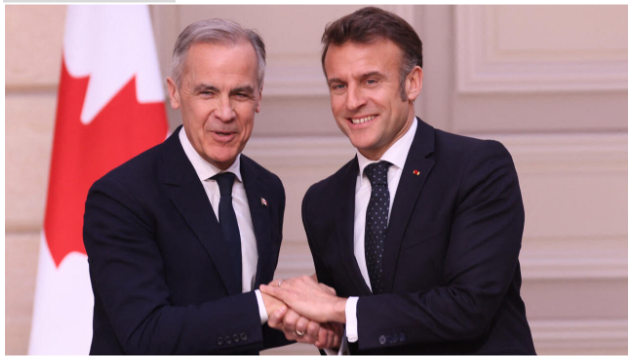
After the Elections – Canada between the EU and the United States
By: Lavinia Tacke
Reading time: 6 minutes
On Monday, April 28, Canada elected a new Prime Minister after the former leader, Justin Trudeau, resigned as leader of the Liberal Party and as Prime Minister in January. The new Prime Minister is Mark Carney, who already took over after Trudeau’s early resignation. Carney’s main campaign promises were to cut taxes for the middle class and to remove trade barriers between the provinces.
What’s all the fuss about? - The 101 of Feminist Foreign Policy
By Anna-Magdalena Glockzin, 4 minutes.
When Former Swedish Foreign Minister Margot Wallström announced in 2014 that Sweden would adopt a Feminist Foreign Policy (FFP), she and Sweden as a country pioneered a feminist lens into foreign policymaking. This approach has often been ridiculed and not taken seriously, as foreign policy is regularly considered gender-neutral. In particular, it is perceived as “soft” and unable to counter crises and aggression. But is this true? What can FFP do, and who benefits from it? This article aims to dive deeper into the concept and the meaning of FFP, as a follow-up on my previous piece on the uncertain future of Feminist Foreign Policy in Germany.

Until the Chimney Smokes White- The 2025 Papal Conclave Begins
By Margaux Baudry, read 3 min
On May 7th, 2025, the thick wooden doors of the Sistine Chapel will once again close behind 133 Catholic cardinals- the electors tasked with choosing the next Pope. But this time, the air is less incense and more tense. Following the death of Pope Francis at the age of 88 on April 21st, the Church faces one of its most unpredictable and fractured conclaves in modern history. With more electors, deeper ideological divisions, and an increasingly globalized Church, this isn’t just about white smoke- it’s about what kind of Church emerges from the ashes.
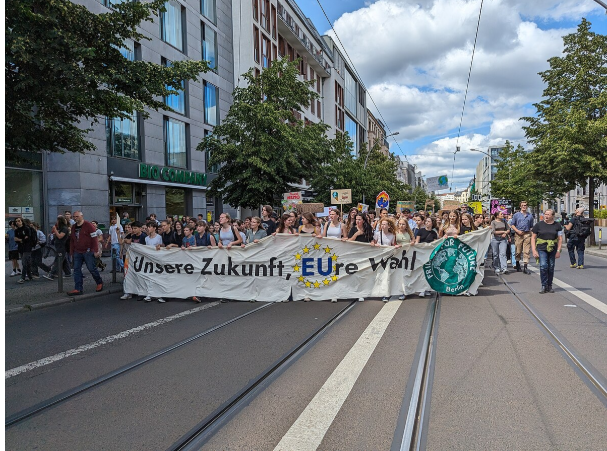
What about the climate? An update on the European Green Deal
By Ben Rosenbaum, Reading Time: ca. 4 minutes
With so many other crises dominating the EU’s agenda, the issue of climate action is much less prominent in the news compared to 6 years ago. But is this development also true for the EU’s actions to combat climate change, or are we just not hearing about it?
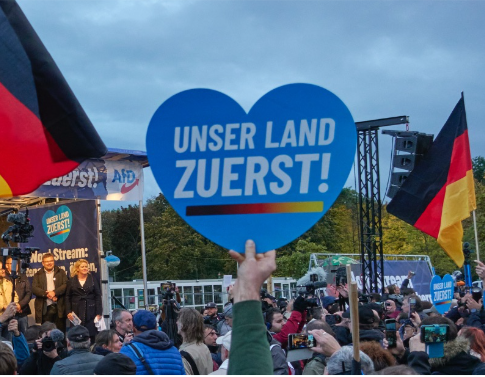
The AfD is a proven right-wing extremist group - What now?
By Anna-Magdalena Glockzin, 4 minutes.
The AfD was the second-largest party in the recent German national elections (20.8% of the vote) and formed the strongest political group in East Germany. It has 15 members in the European Parliament and is even too radical for French far-right leader Marine Le Pen and Italian Prime Minister Giorgia Meloni. Moreover, the party has been linked to the far-right scene meeting in Potsdam on “remigration”, several scandals about foreign influence from Russia and China (take Maximilian Krah as an example), and recurring instances of trivialising the holocaust and the Nazi regime. Now Germany’s domestic intelligence service has officially classified the AfD as a right-wing extremist group. But why has this classification taken so long, and what does it mean for the party and German politics?

An uncertain future: What will happen to Germany’s Feminist Foreign Policy?
By Anna-Magdalena Glockzin, 4 minutes.
Following the German elections in February, the CDU (Christian Democratic Union), its Bavarian sister party CSU (Christian Social Union), and the SPD (Social Democratic Party) have now agreed to form a coalition, the so-called GroKo (Grand Coalition). This agreement is a success, considering the months of uncertainty and stagnation under Scholz’s minority government. Before the new government can take office, the SPD’s membership has to approve the agreement and a CDU convention has to be held. In the meantime, names of potential candidates for the ministries are already being discussed. The Foreign Ministry will be filled by the CDU, with three potential male candidates for this post. Considering Germany’s Feminist Foreign Policy (FFP), adopted by Foreign Minister Annalena Baerbock (The Greens), the question arises of what will happen to this policy approach, as an ideological shift to the right took place in the government, materialising also in the Federal Foreign Office.

Five Years after the COVID-19 Pandemic: What has the EU learned?
By Anna-Magdalena Glockzin, 3 minutes.
Do you remember the last time you wore a mask to protect yourself and your loved ones from an unknown virus? The rapid test before meeting your grandparents? The wait for access to a vaccine? These issues feel like they are from a different time. Today, current debates and concerns deal among many with Russia’s war against Ukraine, Trump’s unpredictable and ruthless politics, and the volatility of the world economy. Nonetheless, the COVID-19 pandemic made one thing very clear: a worldwide health crisis poses severe challenges and risks to our societies. The previous article on the COVID-19 pandemic aftermath discussed to what extent we are still affected today by the consequences of the pandemic. This blog post takes a closer look at the European Union (EU)’s preparedness for future health crises, finally asking whether the EU could deal with another future pandemic.
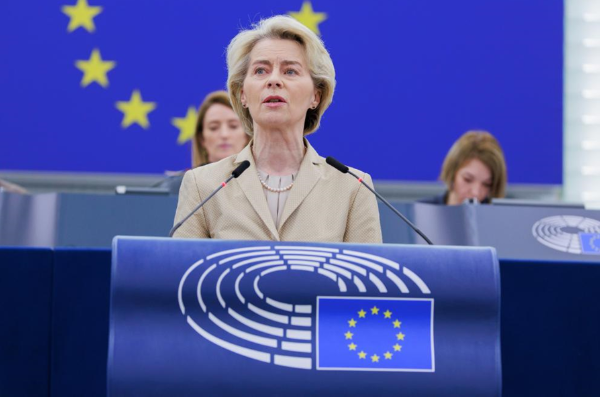
Von der Leyen in the Spotlight
From: Jolanka Kocianova Vuong
Reading Time: 3 minutes 16 seconds
As a Commission President, Ursula Von Der Leyen is used to being at the center of attention. Whether during the first Trump administration, Climate Change, COVID, or the war in Ukraine, Von Der Leyen has always been the person to look up to for the EU to deliver solutions. Yet, this spotlight shines even brighter in the light of Trump's 20% Tariffs challenging the consequential implementation of the Green Deal. What are Von Der Leyen’s plans and how will it affect Europe? Read here to find out more.

From Monopoly to Minerals: Greenland’s Journey Between Denmark, the EU, and the U.S.
By: Lavinia Tacke
Reading time: 5 minutes
In the wake of US President Donald Trump’s interest in Greenland, the world’s largest island has recently become one of the central topics in global media discourse. But what makes Greenland so unique and how did the island become what it is today?

Top 3 European Destinations for Launching Your Dream Business in 2025!
By Gabriel Panza
Read time: 4 Minutes 15 Seconds
Starting a business in Europe can be a challenging venture, with numerous economic, social and political factors to consider. To find a prime location for business, aspiring entrepreneurs must explore diverse economies, innovative ecosystems, and supportive government frameworks. This article will explore five of the best EU countries for launching your business, noting each country’s unique advantages and business-friendly foundations. Whether you’re an experienced businessman or a first-time entrepreneur, understanding the benefits of these countries can aid in making a well-informed decision about where to start your successful business. Join us as we guide you through Europe’s top destinations for making your business dreams a reality!

Press Freedom in Italy – A Human Right in Decline?
By: Lavinia Tacke
Reading time: 4:40 minutes
In January a European spyware scandal flooded the international media. The phones of “around 90 activists and journalists across Europe” were spied on with the use of the software of the Israeli company Paragon Solutions. According to the European Correspondent, the software can “read messages, record calls, track location and exfiltrate data from mobile devices”.

Defense at the Cost of Humanitarian Aid
by: Jolanka Kocianová Vuong
reading time: 5 minutes, 2 seconds
International aid is under attack! The two most prominent aid organizations in the world, USAID and UK Aid are reducing their spending dramatically, with severe consequences all over the world. It seems as if there is a new policy orientation in the world: down with international aid - let's invest in defence! Here, the recently introduced UK Spending Policy illustrates how funding for the country's armed forces comes at the cost of other important areas, most notably humanitarian support. This development gives rise to a few vital questions: What is the future of international aid? Is the EU going to step into the vacuum to substitute Member State spending, or are China and Russia going to use this opportunity to gain soft power in countries depending on foreign aid? Most importantly, are financial aid and defence spending mutually exclusive?
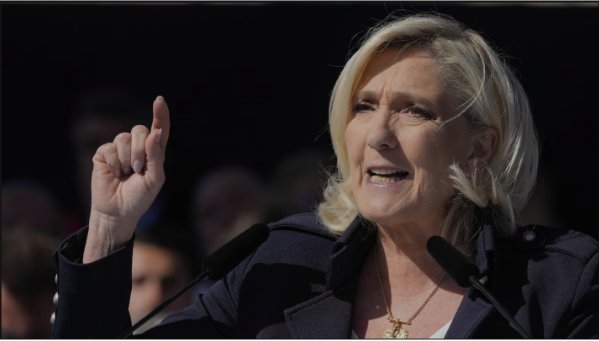
Marine Le Pen’s Conviction— Electoral Ban and Witch-Hunting
by Margaux Baudry, read 2 min 20
After a nine-week trial, Marine Le Pen was found guilty of embezzling a total of 4.5€ million in EU parliamentary funds. From 2004 to 2016, the party she led, Rassemblement National (National Rally), created fake work contracts for individuals with no connection to the European Parliament, using taxpayers’ money to enrich the party. This judgment is not without impact on Le Pen’s career as it bans her from running for office for the next five years. She claimed her conviction was a “political decision” and went on to call it a “witch hunt”. But is this really an unfair punishment—or simply justice finally being served?

CD-U-turn - The new German spending rules
By Ben Rosenbaum, Reading Time: 5 mins
In an unexpected course reversal, Germany’s expected next chancellor, Friedrich Merz, pushed new spending rules through parliament. While these changes have broad support, Merz now faces questions about his credibility and whether these financial changes will be effective.

Security, Europe! The Polish Presidency of the EU Council
Author: Miruna-Antonia Aniculăesei
Reading time: 2.20
“Security, Europe!” is the slogan of the new Presidency of the Council of the European Union, taken over by Poland after Hungary's quite a controversial term. In comparison to the Hungarian Presidency, which failed to properly sanction Russia, the Polish representatives shaped their programme around the issue of security in the current tense geopolitical context.

EU Enlargement- Is that still a thing?
By Margaux Baudry
If you feel like the EU enlargement has been stagnating for the past couple of years, it is because it has. Indeed, the last time the number of EU member states changed was when the UK withdrew in 2020. Before that, it was when Croatia joined the club in 2013. Enlargement is a natural phase of the process of European integration: the EU has been enlarging since its origin, and its expansion, for many, is considered one of the Union’s great successes.. Currently, seven states have been granted candidacy for the EU: Albania, Bosnia and Herzegovina, Georgia, Moldova, Montenegro, North Macedonia, Serbia, Türkiye and, last but not least, Ukraine. So, why is the process of enlargement at a standstill?

5 Years after the COVID-19 pandemic - Are we still affected today?
By Anna-Magdalena Glockzin, 3 minutes.
Lockdowns, masks, vaccination, distance, online… These are all words we associate with the COVID-19 pandemic and they feel like echoes of a distant past. When the Coronavirus hit the world and spread fast, it caused a pandemic and led to millions of deaths, numerous shocks to economies and health care systems around the world, and much more. The pandemic started five years ago and at that time, several countries had imposed lockdowns on their population. Nowadays, it seems like the virus has been defeated and everything went “back to normal”. But this can be misleading and in the following, it will be explained why. Additionally, it is worth examining to what extent the European Union (EU) has learnt from the global crisis and whether it would be prepared for a similar shock in the future. This will be discussed in a follow-up article.

The New Faces of the Far-Right- Have Old White Men Gone Out of Style?
by Margaux Baudry, read 3 min
Not so long ago, far-right politicians were easy to spot in the wild. They were mostly older, wealthy white men, much like their supporters. But nowadays, as it turns out, diversity is trendy even for far-right parties. We can wave goodbye to typical far-right leaders, as one-size-fits-all is completely out of style. Today, far-right parties are more inclusive than you would expect them to be… Here is the new look of the far-right!

Charlatan or genius? What Javier Milei has achieved economically so far in Argentina
By Federico Fo
Javier Milei, the Argentinian president elected in November of 2023, is well-known around the world for his controversial positions regarding the treatment of national economies, as well as for his political position, which strongly supports a libertarian political and economic system. Such a position may also be referred to as a type of anarcho-capitalism, that opposes any kind of State intervention in the economy. Argentina’s economy is known worldwide for its economic fragility. In response, Milei pledged at the beginning of his mandate to particularly focus on the structural problems of the Argentinian economy, promising to do so through the application of his political and economic beliefs. Argentina has thus become a prominent laboratory for economic and political experiments, attracting attention in the international political environment. In this article, we will explore what Milei has accomplished so far.

Democracy under threat - The current political climate in Slovakia
by Jolanka Kocianová Vuong
reading time: 6 mins 24 seconds
Populism is on the rise! It seems this statement has been repeated quite often these days. Politicians such as Trump, Meloni, and Orban all represent extreme positions and controversial policies suited to populist ideals. However, another lesser-known populist politician is Robert Fico, the Prime Minister of Slovakia. In Slovakia, democracy is under threat on a scale not seen since the 1990s—ranging from assassination attempts to coup allegations, the undermining of the executive branch and attacking the opposition. Fico is evolving into Orban 2.0, drawing scrutiny from the European Union. Yet, this situation has not been widely reported in the news. So what is happening in Slovakia, and how is it threatening the democratic order in Europe?