

By: Basile Archemashvili
Reading time: 6 minutes
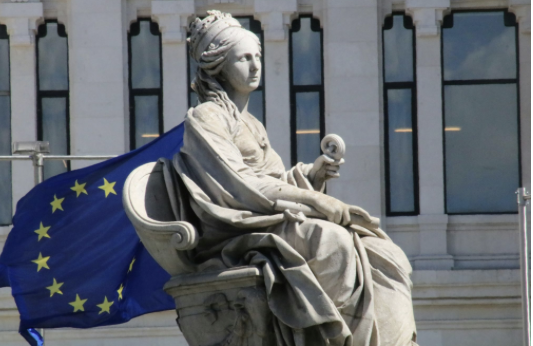
2019, Jorge Fernandez Salas, via Unsplash
In January 2022, in her opening speech as the newly elected president of the European Parliament, Roberta Metsola declared: “Twenty-two years ago, Nicole Fontaine was elected 20 years after Simone Veil. It will not be another two decades until the next woman is standing here. I know I stand on the shoulders of giants.” By paying tribute to the women who shaped the European project before her as Presidents of the European Parliament, Roberta Metsola highlighted the role played by those who can often be forgotten, especially within the narrative of the founding fathers of Europe.
When speaking about the foundations of the European project, we often refer to iconic figures such as Robert Schuman, Alcide de Gasperi or Konrad Adenauer. But the expression “founding fathers of Europe” gives a pretty male image of a construction to which women, however, contributed at several levels. In this article, you will find insights of women whose engagements were decisive in the creation and the consolidation of the European Union.
Ursula Hirschmann - A pioneer of European federalism
In 1941, the anti-fascist activists Ernesto Rossi and Altiero Spinelli, then imprisoned on the island of Ventotene, co-authored the famous Ventotene Manifesto for a “Free and United Europe”, considered by many as the starting point of European federalism. But the Manifesto would not have had its impact if it wasn’t for Ursula Hirschmann. Exiled from Germany because of her jewish and activist status, she was present in Ventotene during the drawing of the Manifesto. She secretly brought it into continental Italy by hiding it on small cigarette papers or sewn into the lining of her coat.
Then, she contributed to the dissemination of the text across the continent. Despite the difficulty to spread such a message during the war, she managed to establish networks of anti-fascists federalists. Those actions eventually led to the creation of the Movimento Federalista Europeo in 1943, which Ursula Hirschmann co-founded. This movement put the idea of a federal Europe on the political agenda. Two years later, she participated in the organisation of the first international federalist congress in Paris.
In the 70s, Hirschmann was struck by the energy of the feminist movements, and decided to use that energy to give a new momentum to the federalist cause. She established the initiative Women for Europe, whose ambition was to strengthen the democratic foundations of the European project, at a time when European integration was facing serious challenges. Her major contribution was to show feminists that a strong and democratic Europe was essential to protecting the most vulnerable and discriminated groups in society, particularly women.
As a German jewish activist, Hirschmann had experienced exile, political persecution and the loss of national belonging. For her, European identity was not simply an additional identity alongside national citizenship, it was also a response to the destructive consequence of nationalism. In her autobiography We, the Stateless, she explains: “We, the uprooted people of Europe, who have changed borders more often than shoes, have nothing to lose but our chains in a United Europe. And that is why we are federalists.” Where would European federalism be without the woman who smuggled its founding text across borders and carried its ideals for the rest of her life?
Sofia Corradi - the Mother of Erasmus
In 1958, Sofia Corradi came back to Italy after she had obtained a Master in comparative law in the United States. Imagine her surprise when her Italian university informed her that it could not recognize her degree and that she would have to complete another year of study. She explained: "An experience of anger and humiliation: that is how Erasmus was born. I promised myself that no other student should have to suffer the same injustice I had experienced." Motivated to prevent others from experiencing the same pain, she spent the following years raising awareness among political leaders and universities about the importance of international academic recognition.
Beyond the recognition of diplomas alone, Sofia Corradi started to think about a programme that could allow European students to study in other European countries: "I wanted an experience abroad, which had historically been a privilege reserved for young people from wealthy families, to become an opportunity available to anyone willing to seize it.”
For her, Europe could not only be built through institutions, but also through exchanges, meetings and friendships. This programme could promote a concrete European citizenship as well as a culture of peace.
Her efforts were rewarded in 1987 with the creation of the Erasmus programme launched by the European Commission under the presidency of Jacques Delors. Today, thanks to Sofia Corradi’s work, more than 14 millions of students have studied abroad and discovered new cultures, helping to build a more open and united Europe.
Simone Veil - Madame Europe
Simone Veil embodies a certain idea of Europe: a complex continent, united in diversity, that remembers its past in order to build its future. A survivor of Auschwitz, she was deeply marked by the Holocaust. The trauma she endured during the Second World War became the driving force behind her lifelong commitment to a united Europe conceived as a project of reconciliation. As she explained, “We were convinced that if the victories of 1945 did not lead to a quick and complete reconciliation with Germany, the wounds of a Europe already torn between East and West would never heal. The world would then be on its way to another conflict, even more devastating than the previous ones.” For her, Europe’s wealth is its diversity.
In 1979, she became a double symbol by being elected in the first European elections by direct universal suffrage, and by being the first woman to preside over the European Parliament. Thanks to these first direct European elections, the Parliament gained new democratic legitimacy and Veil became the political face of this new stage of integration. She embodied the democratization of Europe.
After her presidency, Simone Veil remained engaged in European politics as a Member of the European Parliament, where she argued that Europe must remain a political project and not only an economic one. According to her, its founders had conceived it first and foremost as a political endeavor, one that needed to be renewed in the name of democracy.
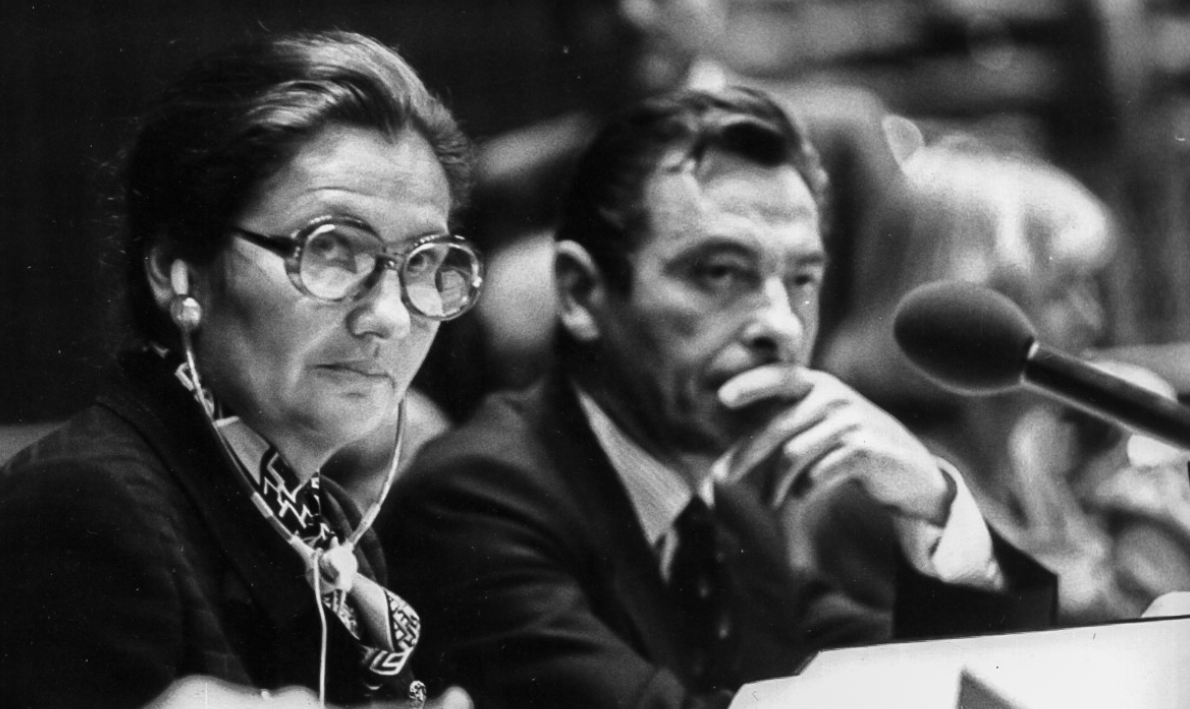
Simone Veil in the European Parliament in 1979. source picture:Claude Truong-Ngoc / Wikimedia Commons - cc-by-sa-3.0, CC BY-SA 3.0, via Wikimedia Commons
Simone Veil helped strengthen the democratic and political legitimacy of the European project, Ursula Hirschmann defended a federal Europe that transcended national divisions, and Sofia Corradi gave European integration a concrete, human dimension by enabling young people to experience other European societies firsthand. Together, they represent three different ways of building Europe: through institutions, through ideas, and through its citizens.
Many other important women could have been mentioned such as Eliane Vogel Polsky, a Belgian lawyer who fought to put into practice the principle of equal pay between men and women set out in the European treaties. Marga Klompé, a Dutch scientist and resistance fighter who became in 1952 the first female member of the European Coal and Steel Community. She especially was involved in expanding European cooperation beyond coal and steel to create a broader common market. Louise Weiss, who devoted her life to Europe from co-founding the review l’Europe Nouvelle in 1918 to her final days as a sitting member of the European Parliament in 1983.
To be continued…
For decades, the History of European Integration was mostly narrated through the achievements of its “founding fathers”. It was not until the 2010s that an effort emerged to rediscover and recognise the women who shaped Europe, especially through Maria Pia Di Nonno’s Founding Mothers of Europe project. Its recognition by the European Commission in 2018, followed by initiatives such as the European Parliament’s 2023 publication of archives on the founding mothers, illustrates a shift towards a more inclusive understanding of Europe’s history.
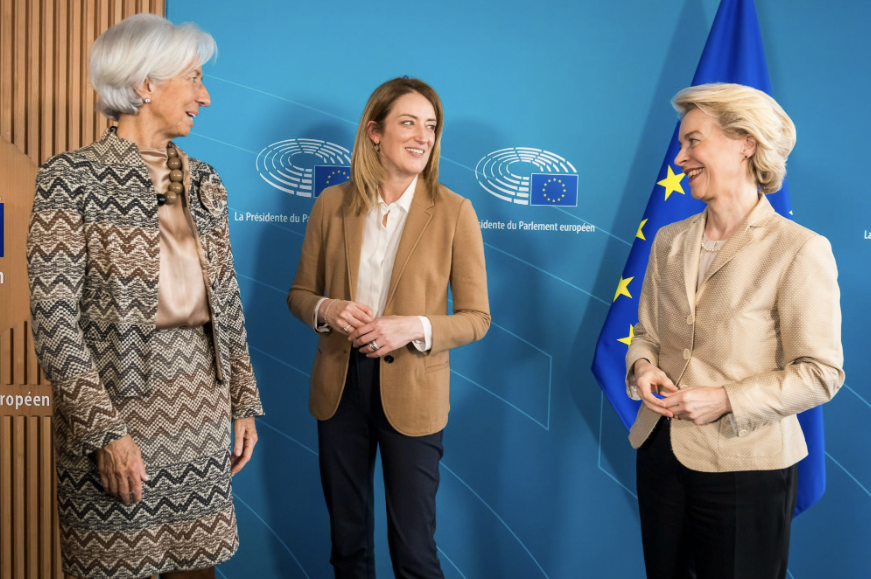
Today, women occupy some of the most important positions within the European Union. Roberta Metsola serves as President of the European Parliament, Ursula Von der Leyen leads the European Commission, and Christine Lagarde presides over the European Central Bank. Their presence is not only a symbol of the progress in women’s political representation, but also a reminder of the generations of women who helped shape the European project before them.
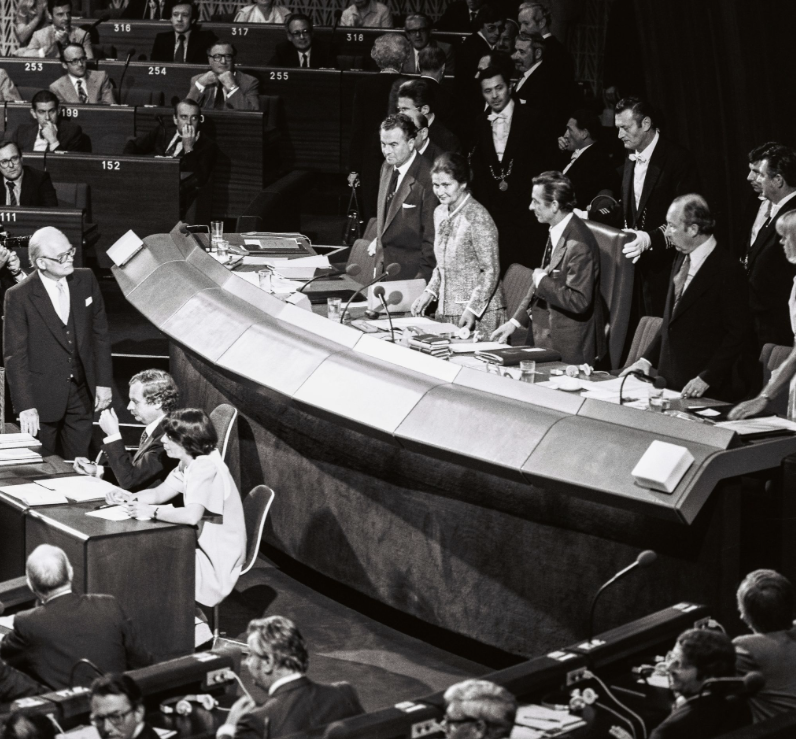
Simone VEIL chairing the first sitting of the European Parliament elected by direct universal suffrage in Strasbourg.© Communautés européennes 1979 - Source : EP

