

Part I: From the EU to the world: a journey through the legal bases, historical developments and the current state of EU external action and strategies
By: Antonio Manuel Torres García, Reading time: 10 min
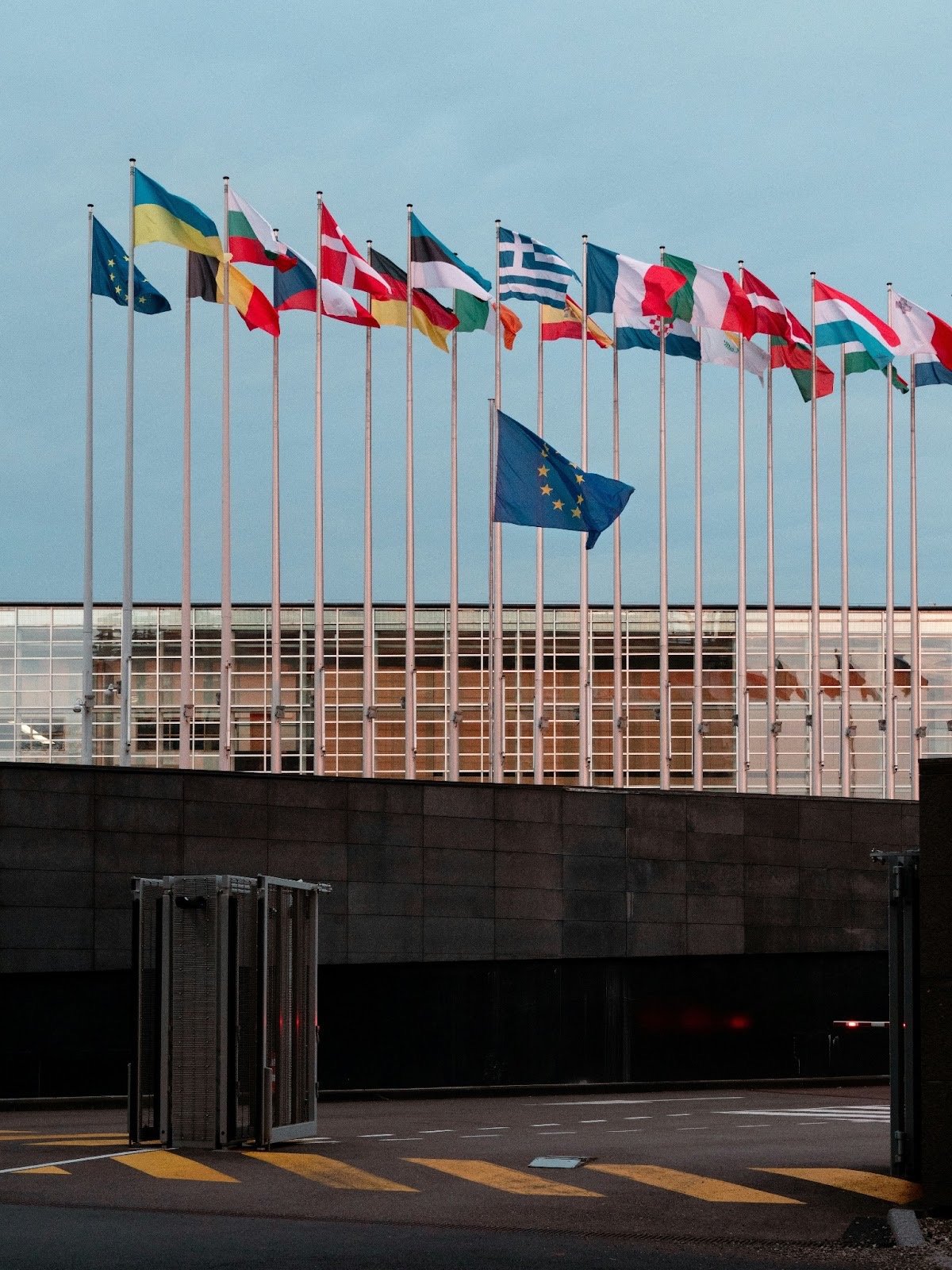
The European Union (EU) is oftentimes viewed as an entity that works for the betterment of its members, and while this is largely true, taking into consideration its objectives, values, competences, and means of action, it is nonetheless a narrow view of the wider action the EU undertakes in a more general scene. The position the EU takes when engaging with foreign agents varies according to mutual interests, feasibility, likelihood, and overall net benefit on both sides. But while trade agreements and economic partnership agreements (EPAs) fall within the external action competences the EU enjoys and tend to take the spotlight, they are not the only scenarios in which the EU engages with other states. Separate from the nascent state of a common European defence policy, which represents another facet of the EU action with external effects, European strategies like the Global Gateway mount up to projects comprising initiatives with the aim of tackling the world’s most pressing global challenges; a project that unavoidably carries an explicit “global” approach.
In this first part of the article, we will dive into the legal basis allowing the EU to carry out specific external actions, in order to understand their relevance. In the second part of the article, which will be published soon, we will revisit the historical development of these actions and, finally, consider the most recent initiatives, with a view to the shifts they may represent in the broader context.
The EU: an integrated actor in the international scene by default
The fact that the EU is a product of international cooperation is undebatable. However, what once started with more of an inward-looking approach, such as security and economic integration of its members, quickly widened its scope and areas of action, updating its means and competences in tune with contemporary challenges and opportunities. It is in this context of expansion and development that the EU is conferred larger powers and solidifies its presence in the international arena. The EU has legal personality (Art. 47 TEU) and areas of competence in which to engage in cooperation with other international organisations or states. To this end,several provisions in its founding Treaties regulate these matters.
One of these notable provisions is Art. 3(5) TEU, which establishes the general approach the EU must take in its relations with the wider world, whose objectives can be identified as the contribution to peace, security, sustainable development, solidarity, and mutual respect among peoples globally. This provision represents the general picture in which other operative elements must abide by.
Under Title V of the TEU we can find the general principles and objectives of the EU’s external action, forming the core foundation for EU policies in relation to third countries and other legal entities. In this sense, Art. 21 TEU further deepens the previously mentioned article by fleshing out more specifically the objectives, principles, and values the EU must respect and abide by in its external action. Among these, we can find the consolidation of democracy, rule of law and human rights, sustainable economic, social, and environmental development, and poverty eradication, alongside others. It must be noted that it requires the consistency of external actions with internal policies, setting an order for coherence and rationality.
Art. 22 TEU further outlines the creation of strategies for external action and defines the pivotal role the European Council (EuCo) represents as a guiding force. Articles from 24 to 46 TEU comprise the Common Foreign and Security Policy (CFSP) provisions, collecting the specific means, areas of action and the roles of the relevant actors, such as the High Representative of the Union for Foreign Affairs and Security Policy, the Commission, the Council of the EU, the Member States and, as mentioned, the EuCo. It is relevant to mention the exclusion of the Court of Justice of the EU (CJEU) jurisdiction specifically in CFSP matters, and the role that the Council of the EU plays as the institution of utmost importance in this context, a legacy architecture stemming from the pre-Lisbon system of pillars whose main trait was its intergovernmental nature.
These provisions are further complemented by the more specific nature of the relevant articles found in the TFEU. It is in this text that we may find the more practical approach of what the TEU puts forward. In this spirit, Articles 208-211 TFEU group the development and cooperation provisions, whose main objective is the reduction and eradication of poverty. It specifies that the EU development policy must be complementary to Member States’, and it allows the EU to sign agreements with countries that may benefit from cooperation in the field of development.
In the same light, Article 212 TFEU relates to economic, financial, and technical cooperation, enabling wider cooperation beyond traditional development aid, and Article 213 TFEU, which allows for emergency financial assistance to third countries. In the field of humanitarian aid, Article 214 TFEU grants ad hoc assistance following the principles of neutrality, impartiality and non-discrimination to third countries in need. Finally, Article 215 TFEU provides for restrictive measures, serving as the basis for sanctions and certain crisis-response funding mechanisms.
It is worth mentioning that the EU’s external action underlying architecture refers back to Art. 2 TEU, which contains the foundational values of the Union and, in this context, works as the guiding concepts that every initiative must strive towards. Despite not being the topic of the present article, it must be noted that the general structure of the EU’s external action may represent current-times neocolonialism, by exporting values that may not be common outside the Union.
Taking the aforementioned into account, it is undeniable that the EU enjoys a fair margin of operation when it comes to external action. With time, it has become the depository of determined competences to undergo projects and schemes, be it in a more independent manner or in a closer cooperation with its Member States, with third countries.
In the second part of the article, we will zoom in on past experiences and strategies, without which the present landscape can’t be properly understood, and assess contemporary approaches.