
The 28th Regime - The next big step for the European Single Market
By: Lavinia Tacke
Reading time: 4 minutes
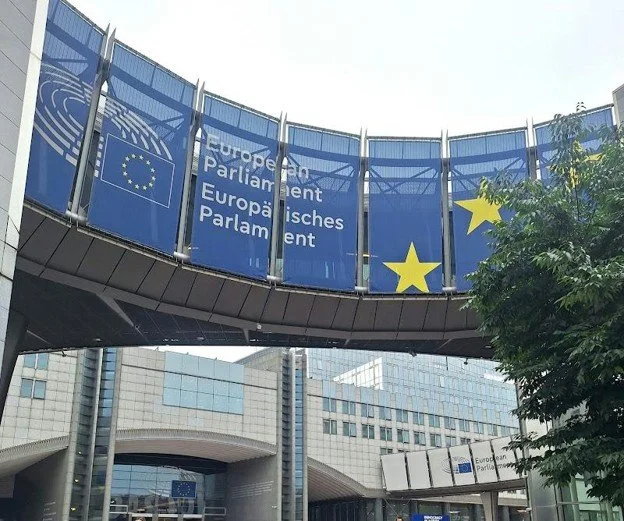
European Parliament in Brussels; source: private picture by the author.
We have a Single Market in the European Economic Area, so starting an Europe-wide business should be very easy, should it not?
Well, it can be argued that since every Member State has their own legal framework for building a business, this is not yet quite true. However, the EU is now aiming to reform this very aspect with an EU-wide corporate legal framework, known as EU Inc. This would constitute another option to build a business in the EU alongside the currently existing national legal frameworks in all 27 Member States.
Wait, what is meant by the corporate legal framework?
A corporate legal framework represents a set of laws, regulations, and rules governing how businesses are managed and formed. Currently, each member state has its own corporate legal framework, meaning the rules to set up a business differ from member state to member state.
The Commission has proposed a regulation establishing the 28th Regime on 18 March 2026, which means now it is the Parliament's, and more specifically the Committee on Legal Affairs', turn to decide on the proposal.
The hopes amongst EU enthusiasts are high, as this proposal is sought to be a major step towards an even more integrated single market. Under the new EU Inc. framework, startups can be set up much more easily, since the rules and procedures are designed to be more accessible for founders. The mission is clear: The 28th framework is designed to strengthen the European single market and the EU’s competitiveness.
According to the current proposal, EU Inc. companies could be founded within 48 hours for €100 and without minimum share capital requirements. This would entail a blanket removal of in-person formalities, as the procedures would be conducted digitally. Another benefit of an EU Inc. company would be that it can operate freely in any EU Member State, without the pile of administrative burden. Stakeholder groups such as the Bundesverband der Deutschen Industrie [Federal Association of the German Industrie] voice their support for the initiative, and "particularly welcome[...] digital company formation”.
While it sounds almost too good to be true, some concerns persist regarding the 28th Regime. Firstly, among many MEPs there is the concern that this concept would lead to some countries, where taxes are lower, becoming hubs for businesses. Safeguarding the economic well-being of all Member States will therefore be a hot topic in the Committee meetings. Secondly, there are concerns around national employment and social laws as they differ from Member State to Member State. How will safeguarding these rights be ensured in pan-European companies like EU Inc?
Consequently, this question has led to recent controversies and Union protests in front of the EU Parliament in Brussels. The protesters and other observers fear that the new EU Inc design could undermine national labour laws by making moving to other member states with lower national labour rights standards considerably easier. Especially in Germany, this concern was widespread as the German national legal framework imposes an obligation on companies of a certain size to put forward a supervisory board [Aufsichtsrat] which would serve as a consultative and discussion function between stakeholders, employees, and the company board. Therefore, this supervisory board acts as a democratic controlling body within companies that shall ensure a high level of workers’ rights. The German Union ver.di fears that through EU Inc.’s companies might find a loophole to avoid having such supervisory boards which, as ver.di argues, would undermine employees’ participation and ultimately workers’ rights.
Lastly, the removal of administrative burden sounds pleasant at first, but critics remain hesitant that this might diminish safeguards against money laundering and abuse. The German Federal Chamber of Notaries argues that the proposal is too heavily influenced by Anglo-American role models and fails to acknowledge institutional differences between the Anglo-American world and the EU.
With the establishment of the 28th Regime, the EU is therefore faced with the difficult task of balancing workers’ rights, administrative safeguards, and tax concerns with the EU’s competitiveness. A decision by the Council and the Parliament is hoped to be agreed upon “by the end of 2026”; therefore, we’ll have to stay tuned for the final legislation and its impacts on European entrepreneurs.