

Author: Lana Simončič
Reading time: 7 mins
For twenty years the Western Balkans have been asked to prove they’re ready for the EU. It’s time to ask whether the EU is ready for them to join.
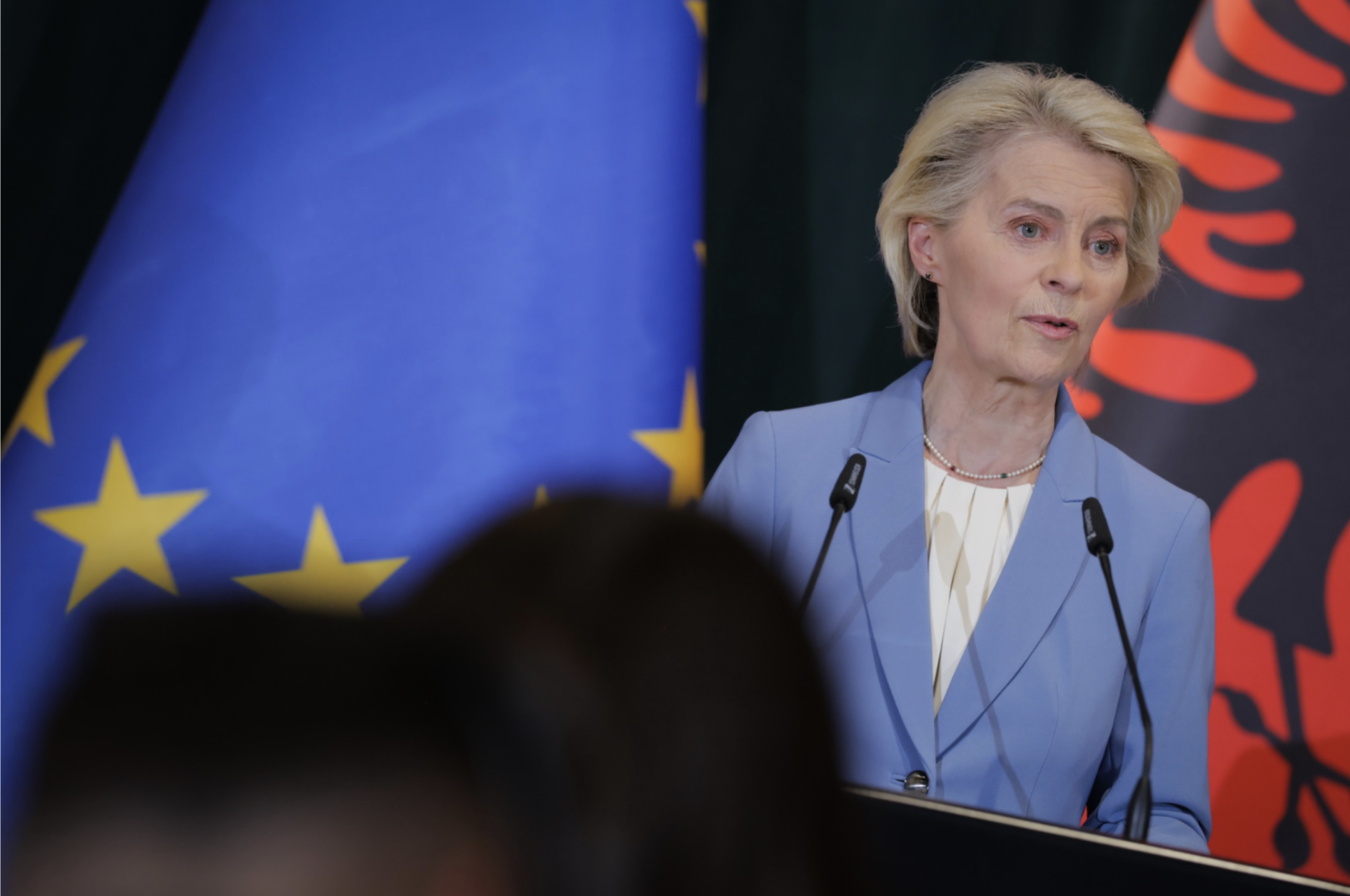
Commission President Ursula von der Leyen on her Western Balkan tour in September 2026. Source picture: © European Union, 2026, CC BY 4.0, via Wikimedia Commons
The last EU enlargement happened in 2013, almost 14 years ago, when the second former Yugoslav country, Croatia, joined the EU. Since then, multiple Western Balkan countries, including Bosnia and Herzegovina, North Macedonia, Serbia, and finally Montenegro, which is currently the candidate closest to accession, have been in the process of joining the Union. What’s striking here is that some of these candidates have applied for EU membership more than a decade ago, for example North Macedonia who applied in 2004.
Many people believe that the Candidates have been in the waiting room for too long, but why has the accession process of the Western Balkans countries taken so long, despite the fact that they follow a special enlargement process of stabilization and association (SAP)? Is it because the candidates are not ready, or could it be because the Union has not adapted to be able to function with 35+ Member States? The current enlargement debate focuses extensively on candidates’ readiness. However, is it perhaps time to switch the focus to the Union's readiness to answer the question: “Who is really responsible for the enlargement deadlock?”
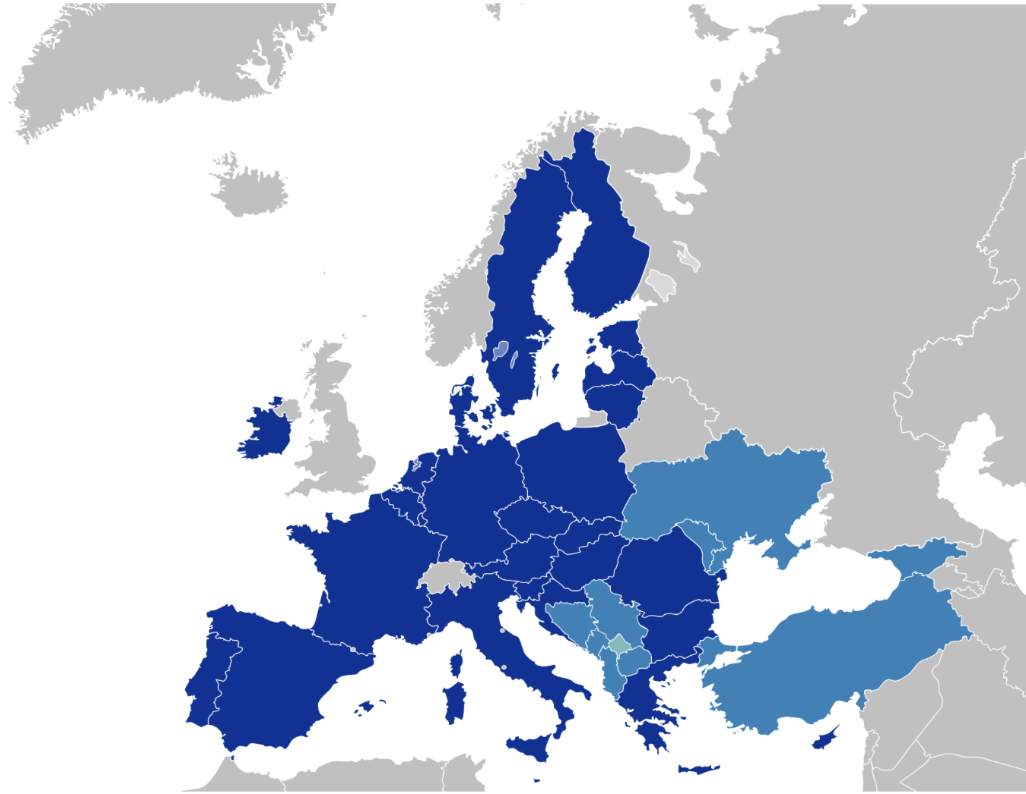
The EU candidate countries Albania, Bosnia Herzegovina, Montenegro, North Macedonia, Serbia, Turkey, Ukraine, Moldova, and Georgia, and potential candidate Kosovo. Source picture: Kolja21, CC0, via Wikimedia Commons
When it comes to EU enlargement, there is an ongoing debate between the necessity of enlargement and its risk for the Union. Enlargement is definitely a strategic investment in peace, security, stability and prosperity of the European continent. Some even argue that enlargement cannot be viewed as an optional tool, but rather a cornerstone of Europe’s capacity to adapt and effectively respond to crises, and furthermore strengthen its influence on the global stage. Therefore, failure to pursue enlargement could diminish the EU’s geopolitical influence, weaken its strategic autonomy, and prolong instability along its borders.
On the other hand, enlargement can endanger the Union which is already difficult to govern. As Sandro Gozi warned, without a prior internal reform, it could risk EU paralysis, lead to institutional constraints, and make the EU vulnerable to internal political leverage. Ultimately, the challenge is not to choose between enlargement or institutional stability, but to ensure that the EU undertakes the necessary institutional reforms to accommodate much needed enlargement without undermining its ability to function effectively. The candidates know exactly what they must do to be ready, however, does the same apply to the Union?
Traditional understanding of enlargement as a one-way process in which only the candidates must adapt to accede to the Union is flawed. Enlargement needs to be viewed as a two-sided readiness test, where candidates’ readiness, and equally important, the Union’s readiness are two sides of the same coin. Only by examining enlargement through this “dual lens”, can it be successful and sustainable long term, fulfilling its original purpose of pursuing stability and prosperity.
Thus, firstly, are the Western Balkans ready for accession? Art. 49 TEU stipulates that for accession state needs to respect values in Art. 2 TEU (EU’s fundamental values), be a European state and comply with Copenhagen criteria. Those include political and economic requirements, namely democracy, rule of law, functioning market economy and implementation of the acquis communautaire, that countries need to meet, if they wish to accede to the Union. Apart from the Copenhagen criteria, there are some additional regional cooperation requirements that apply to the Western Balkans. If candidates comply with the established criteria (Commission has monopoly on assessing the compliance), and Member States, in the Council of the EU, unanimously agree, the candidate can finally be able to accede, subject to the conclusion and ratification (in all Member States) of the accession treaty. While some candidates, such as Montenegro, are closer to accession than others, it should be emphasized that accession is not automatic upon fulfilment of the requirements, as it also depends on EU’s capacity to integrate the new members effectively, which means being institutionally, and not only geopolitically ready for the enlargement.
Picture source: Cancillería Ecuador, CC BY-SA 2.0, via Wikimedia Commons
Secondly, is the EU ready for enlargement? Can it continue to function effectively after welcoming the new members? There are three main constitutional challenges that require solutions for the Union to be institutionally ready to function with 35+ members. These are: preserving decision-making capacity, upholding respect for fundamental values, and addressing more heterogeneity by adapting existing mechanisms of institutional flexibility. There is a risk of a bigger EU being unable to adopt decisions quickly and efficiently, or to adopt decisions at all. This especially applies to the areas that currently require unanimity, such as the Common Foreign and Security Policy (CFSP), the EU budget and even enlargement. Moreover, in practice, the Council operates by consensus, even in areas where unanimity is not formally required. When the Union consisted of just six members, reaching consensus was simpler, and even logical.
However, is it realistic in a union of 35+ Member States? That is highly unlikely. Requiring unanimity could practically “handicap” the Union, as 35+ Member States hold divergent interests and priorities. Even when a decision is reasonable and beneficial to the Union as a whole, some Members would leverage their veto power to accomplish something in their national political interest that could otherwise not be achieved. A clear example of this is Hungary threatening to block Ukraine’s integration with the EU because of its frozen cohesion funds. With further enlargement, the risk of such vetoes, political deadlock, and institutional paralysis could increase, which could make it more difficult for the EU to function effectively.
That is why a switch from unanimity to qualified majority decision-making is needed. Such a switch can be realized in two ways; either by revising the treaty rules on decision-making (this is unlikely to happen in the near future, as the treaty revision is difficult due to the “double veto” system), or using the existing mechanism provided for in the treaties - passerelle clauses, which allow decision-making in the council to be changed from unanimity to qualified majority, in areas where the council decides so unanimously.
The next needed institutional reform is a robust system of protection of fundamental values, applicable to all Member States, not just candidates. How can the EU credibly demand democratic standards from candidates, if it struggles to enforce those same standards among existing members? The Union’s existing mechanism for the fundamental values protection have largely proved to be inefficient. For example, Art. 7 TEU procedure is powerful in theory, as it leads to the suspension of voting rights in the Council, but is in reality, ineffective and difficult to deploy, due to requiring unanimity and further high voting threshold.
Next, infringement proceedings may be a good solution to individual violations of EU law obligations, however, they cannot adequately address the systemic deterioration of values. Moreover, they are quite slow and dependent on the Commission’s discretion. Lastly, the conditionality mechanisms, for instance, the Conditionality regulation protects values only where breaches of them affect the EU budget, which largely restrains its use. Inefficiency of this value-protection mechanism has allowed certain Member States, for example Poland and Hungary to avoid tangible consequences for their violations of the fundamental values of the EU. This can create a double standard dilemma, with candidates, on one side, facing strict scrutiny for compliance with Art. 2 values, and Member States, on the other, being treated more leniently when it comes to (non)compliance with these same values. If the Union does not have the capacity to ensure respect for its foundational values, even after accession, then principle of non-regression is just a dead letter.
Until the Union can show it can function with 35+ members, “readiness” of candidates is the wrong question. For a successful enlargement to happen two conditions must be fulfilled cumulatively; the candidates must be ready, and so does the Union. If a candidate meets every accession condition but the EU has not yet adapted to take in new members, two possible scenarios can follow. Either the candidate waits on standby until the Union is ready, or accession goes ahead before the Union has adapted. Even though such accession could be detrimental for the union as a whole, it might be pursued for strategic geopolitical reasons.
The Western Balkans sit at the edge of the EU but not inside it, and that in-between status matters. When accession has no clear end date, governments look for other partners, and Russia and China are ready to offer them. China is looking for opportunities to invest in this area, while Russia strives to strategically weaken the EU’s role in that area. Their tools include political ties, loans and infrastructure contracts, energy supply, media influence, etc. Not all of this is hostile, since states are free to trade with whomever they like. But, for example, Chinese investment comes without the stringent reform conditions that the EU attaches to its financial incentives, which can weaken the motivation to meet EU standards, and that is where the trouble starts. Leaving the candidates in the EU’s “waiting room” too long slowly undermines the credibility of the “EU promise” and consequently political and societal support for EU-oriented reforms.
It looks like the EU needs to strike a balance between being institutionally reformed before enlargement can happen, which could potentially lead to leaving prepared candidates in the waiting room for too long, and so called “premature enlargement” that risks the EU order losing coherence and becoming difficult to govern. Is what the EU risks losing, if it prioritizes internal readiness, greater than that the possible side-effects of premature enlargement?
The question is not only whether the Western Balkans are ready for the EU. It is also whether the EU is ready for enlargement. Until the Union reforms its decision-making and its protection of its fundamental values, the main obstacle to enlargement is not in the Western Balkans. It is in the EU itself.