

Updates on the Single Market
By: Olaia Mujika Anduiza
Reading time: 4 minutes

Source: European Commission
One of the first things that usually comes to mind when we talk about the EU is the Single Market. Established following the Treaty of Rome in 1957, it is always cited as one of the Union’s greatest achievements. Rightly so, given everything it entails and what makes us unique: the famous free movement of goods, services, capital, and labour.
However, when I think about the Single Market, I see something that is constantly evolving and that generates headline after headline because it shapes various aspects of our economy and daily life. Yet many of these developments pass largely unnoticed, often only gaining attention when their broader implications become impossible to ignore.
So today, I want to take a closer look at two recent Single Market developments that, in my view, signal a particularly interesting trend in where things may be heading.
Single Market of 27
For a policy that is so emblematic of European integration, we tend to overlook the fact that it remains, in many ways, an incomplete market. Conveniently, perhaps, this was easy to ignore until we started to feel the pressure on our competitiveness.
The debate was reignited with the Letta Report in 2024, in which Enrico Letta argued that we urgently needed to move from 27 markets to truly one, warning that fragmentation was undermining Europe’s economic strength. Two years later, European Commission President Ursula von der Leyen picked up this agenda.
Just a few days ago, she announced the Commission’s initiative “One Europe, One Market”. The objective is ambitious: to build a genuinely unified market within two years and help close the competitiveness gap with the United States and China.
Interestingly, this push is expected to rely on “fewer directives and more regulations”, following von der Leyen’s own words. In other words, the Commission seems to be pursuing a two-track strategy: on the one hand, recent Omnibus packages aim to ease the regulatory burden on companies; on the other, the shift towards regulations seeks to tighten coordination among Member States and reduce fragmentation. All in the name of the same objective: boosting Europe’s economy and ensuring that we stop driving the world’s second-largest economy with the handbrake on.
However, while this is certainly a step in the right direction, it remains insufficient. The Single Market continues to face a wide range of structural challenges. Fragmentation is one of them, but administrative barriers must also be acknowledged, as they often stem from the procedures surrounding the implementation and enforcement of EU legislation. Perhaps most critically, comprehensive data on the barriers that hinder the effective functioning of the Single Market remains limited.
Thus, whether the Commission will translate this renewed political momentum into concrete and far-reaching measures remains to be seen. The reality, however, is that there is little time for small, incremental steps when experts are urging Europe to move faster. The key question is whether growing competitiveness pressures and shifting geopolitical dynamics will be enough to keep the Single Market at the centre of the EU agenda. From where I stand, it is no longer a matter of if reform is coming, but how ambitious (and how fast) it will be.
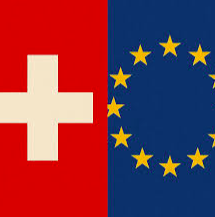
Although Switzerland is not an EU member, it still participates in the Single Market through a web of bilateral agreements. These agreements matter for the EU, but they are absolutely vital for Switzerland. After all, the EU is Switzerland’s largest trading partner, while Switzerland ranks as the EU’s fourth-largest trading partner, after the United Kingdom, the United States, and China.
The relationship, however, has never been straightforward. Instead of one single framework, cooperation runs through multiple sectoral agreements, each covering specific areas. A few years ago, there was an attempt to simplify this system through an Institutional Framework Agreement, but in 2021 the Swiss Federal Council walked away from the negotiations. The move was heavily criticised, with many accusing Switzerland of taking a selective approach: engaging where it benefits and stepping back where it does not.
Now, there are signs of both sides moving closer again, not through a big institutional deal, but through smaller, more gradual steps. On 24 February, the Council gave its green light to the signing of a broad package of agreements aimed at deepening and expanding EU–Switzerland relations.
Key areas in the new package include food security, health, air and land transport, and space cooperation. Switzerland will still need to approve the agreements domestically, with the final say likely resting with voters.
At the same time, though, another development is unfolding that points in a different direction. On 24 June 2026, the Swiss government called for a referendum to cap the population at 10 million people. If that threshold were exceeded, the government would be required to terminate the free movement agreement with the EU, which appears to be quite a popular idea among citizens.
Hence, it is one of those moments where two headlines seem to pull in opposite directions. The coming months will show what Switzerland really wants from its relationship with the EU: deeper integration, greater distance, or, as has often been the case, something carefully in between.
Certainly, the moment Swiss voters decide on whether to deepen these agreements will make headlines. In the meantime, by looking at other ongoing developments, it is already possible to start getting a sense of what may be coming next.