

After Brexit, a Break-Up? What Scottish, Welsh and Northern Irish Independence could mean for the EU
By: Tricia Pelser
Reading time: 9,5 minutes
Source: Photograph by Mike Peel (www.mikepeel.net)., CC BY-SA 4.0 <https://creativecommons.org/licenses/by-sa/4.0>, via Wikimedia Commons
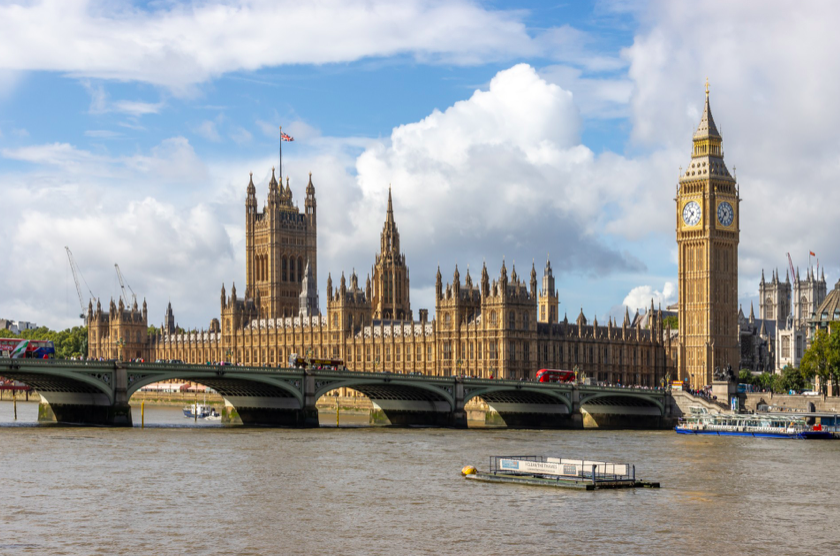
Westminster’s time is coming to an end. Few phrases could better capture the constitutional uncertainty which is now facing the United Kingdom. For centuries, Westminster has stood at the centre of political power in Britain, but that position is increasingly being questioned by the nations governed from it. Scotland, Wales and Northern Ireland have very different visions for their respective futures, but the fact that all three are now collectively questioning the future of the Union marks a significant shift in British politics unlike any we have seen before.
This is no longer simply a dispute between devolved governments and London, or a disagreement over the policies of one Westminster government. It raises a much larger question about the structure of the current United Kingdom, and whether it as a political union can continue in its current form? For the first time in generations, the political map of Britain may be entering a period of fundamental change. While the consequences of such a transformation would undoubtedly be felt most immediately in Britain, they would not stop at the English Channel. If the United Kingdom’s borders are redrawn, the European Union may find itself looking at a very different map of Europe.
The possibility of the division of the United Kingdom would be much more than just a constitutional crisis within British borders. The European Union would have a direct stake in what happens next. Scotland may seek to become an EU member state in its own right, while Northern Ireland may potentially leave through reunification with Ireland, directly realigning it within the EU’s existing legal and political framework. Meanwhile, Wales may introduce an entirely new question about the relationship between Welsh independence and European integration. None of these outcomes are inevitable, nor would they happen overnight. However, together, they raise the possibility of something that would have seemed almost unimaginable when the UK voted for Brexit in 2016; parts of the state that left the European Union could find themselves gravitating towards it again.
Brexit was only the beginning
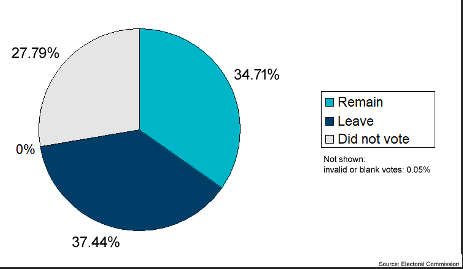
2016 Brexit Referendum Results
Source: Electoral Commission from Wikimedia Commons
Brexit was supposed to settle Britain’s relationship with Europe, however it has instead opened a much more complicated question about Britain’s relationship with itself. The 2016 referendum was presented as a decision for the United Kingdom as a whole, but its result exposed significant differences between its constituent nations. Scotland voted overwhelmingly to remain, with 62% of voters rejecting Brexit, while Northern Ireland also voted to remain. Wales, however, voted 52.5% to leave, broadly aligning with England's decision. The UK subsequently left the Union as a single state, meaning that the nations with very different views on Brexit were taken in the same direction. In doing so, Brexit did not simply create a new relationship between Westminster and Brussels, but rather intensified existing questions over who should have the power to determine each nation’s future. The irony is difficult to ignore; a political project which was built around reclaiming national sovereignty may have directly contributed to a renewed challenge to the sovereignty of the United Kingdom itself. The divisions revealed by the 2016 referendum exposed different understandings of what the United Kingdom’s place in Europe should be. This makes the consequences of Brexit much more complicated than a simple divide between a pro-European Scotland and an anti-European England. Instead, the referendum demonstrated that the four nations of the United Kingdom could hold fundamentally different views about their political economic futures. Yet despite these differences, the result applied equally across the UK. Brexit therefore became more than a question of EU membership, and rather a test of whether a single political decision could continue to represent four increasingly distinct national perspectives.
The constitutional tensions created by Brexit have continued long after the referendum itself. Devolution was intended to give Scotland, Wales and Northern Ireland greater control over their domestic affairs while keeping them within the wider United Kingdom. Brexit, however, demonstrated the limits of that autonomy. The decision to leave the EU was made at the UK level, despite the different preferences expressed across the nations. This has helped bring an old question back into focus. Where should the political power ultimately lie? For supporters of the greater Scottish, Welsh or Northern Irish autonomy, Westminster’s authority can increasingly appear less like an unquestioned centre of government and more like a constitutional arrangement open to renegotiation. Brexit may therefore have changed not only Britain’s relationship with Europe, but also the way its constituent nations view their relationship with Britain itself.
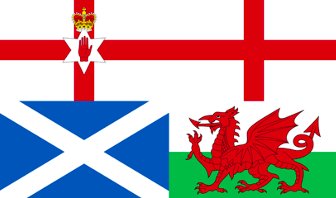
Three Nations, Three Paths Beyond Westminster
Wikimedia Commons (public domain/CC0)
Of the three nations, Scotland has the clearest connection between independence and the possibility of re-entering the EU. Despite the UK departure, the nation has always maintained a strong pro-European stance and has had a longstanding aim supported by a majority of Scots to rejoin the EU as an independent country. The 62% vote to remain in the Union placed Scotland firmly at odds with the overall result of the United Kingdom, and the subsequent years have strengthened the argument that independence could provide a route back to Europe. The independence debate in Scotland is therefore no longer simply about whether Scotland should govern itself from Edinburgh rather than London. It is about whether an independent Scotland should once again become part of the European Union, and reverse the entirety of Brexit.
Northern Ireland, however, presents a fundamentally different route out of the United Kingdom. Unlike Scotland and Wales, its constitutional future is directly connected to the possibility of Irish reunification. Under the framework established by the Good Friday Agreement, the constitutional status of Northern Ireland can change if a majority supports joining a united Ireland. This means that Northern Ireland's departure from the UK would not necessarily create another independent European state. Instead, it could result in Northern Ireland becoming part of Ireland, which is already an existing EU Member State. Brexit has made Northern Ireland's position even more unusual. While Northern Ireland voted to remain in the EU, it was ultimately taken out of the Union alongside the rest of the UK. Yet because of the unique circumstances of the island of Ireland and the importance of avoiding a hard border, Northern Ireland has retained a distinctive relationship with the EU.
The result is that Northern Ireland is simultaneously part of the United Kingdom and subject to certain European rules from which the rest of the UK has departed. Brexit therefore did not resolve Northern Ireland's constitutional position. Instead, it made the question of where Northern Ireland belongs politically, economically and constitutionally more European than it had been for decades. If Northern Ireland were to become part of a united Ireland, the European consequences would be immediate. Rather than applying to join the EU as a new state, Northern Ireland would become part of a country that is already a Member State. The EU's external border would consequently move from the island of Ireland to the island of Britain, fundamentally changing the relationship between the EU and what remained of the UK. Such a development would also demonstrate how profoundly Brexit has altered the constitutional significance of Northern Ireland. What was once primarily understood as a question of British-Irish relations would become a major question for the European Union itself.
Wales complicates the narrative even further. Unlike Scotland and Northern Ireland, Wales voted to leave the European Union in 2016, with 52.5% supporting Brexit. Welsh independence therefore cannot simply be explained as a reaction against a Brexit decision imposed by England. There would be no guarantee that an independent Welsh state would immediately seek EU membership, particularly given the country's Brexit vote. Yet independence would force Wales to make a new decision about its relationship with Europe, rather than inheriting one from Westminster. It could choose closer integration with the EU, pursue another form of relationship or remain outside the Union. Whatever decision it made, the European dimension would be unavoidable. Wales demonstrates that the potential break-up of the UK cannot be reduced to a story of Brexit being undone, but it is instead a question of what political futures the individual nations would choose once they were able to determine those futures for themselves.
Wales may therefore be the wildcard in any future break-up of the United Kingdom. Scotland has a clear pro-European independence argument, while Northern Ireland has a constitutional route into an existing EU Member State. Wales fits neither model, yet its presence in the wider debate is what makes the situation so significant. If all three nations were to pursue greater separation from Westminster, the EU would not be responding to one isolated independence movement but to the potential restructuring of an entire European state. The question would no longer be simply what happens to Scotland or Northern Ireland, but what a post-United Kingdom Europe could look like.
What Britain’s Break-Up Could Mean for Europe
The potential consequences for the European Union are therefore difficult to overstate. An independent Scotland could seek EU membership, Northern Ireland could potentially become part of Ireland and an independent Wales could have to determine its own relationship with the Union. None of these scenarios is guaranteed, but even the possibility would challenge the political geography created by Brexit. The European map could change not through the expansion of a traditional great power, but through the fragmentation of one. For the EU, this would mean dealing with the emergence of new political borders in a part of Europe that has historically been governed through a single state. New borders would mean new arrangements for customs, trade and the movement of people. Fisheries, energy networks, transport links and security cooperation would all have to be reconsidered. The EU would also need to establish a new relationship with whatever remained of the United Kingdom, potentially transforming the existing EU-UK relationship once again. European integration would therefore bring opportunities, but it would not make the consequences of British fragmentation straightforward. A smaller UK could mean a larger EU, but it could also mean a far more complicated one.
The most interesting consequence, however, would be ideological rather than territorial. Brexit was built around the idea that sovereignty had been transferred too far away from Britain and should be returned to the national level. Scottish or Welsh independence could demonstrate a different understanding of sovereignty, one in which a nation can seek political independence from a larger state while simultaneously choosing to pool aspects of that sovereignty within the European Union. In this sense, European integration and national independence do not necessarily have to be opposing projects. For a newly independent state, EU membership can provide access to a larger political and economic framework that a small state could not easily create alone.
The European Paradox of Brexit
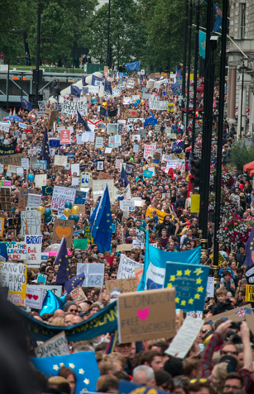
Photo by Matt Brown on Unsplash
It would be tempting to portray such developments as an uncomplicated victory for the European Union. They would not be. The EU would have to navigate complex accession negotiations, economic questions and the practical consequences of new borders, while maintaining a stable relationship with the remaining UK. Britain could become less integrated as a state while parts of what was once Britain became more integrated into Europe. What began as a rejection of European political integration could ultimately contribute to a Europe that is, in some respects, more closely connected to the nations of the British Isles than the Europe that existed before Brexit, creating the greatest irony of all.
The EU would also have to balance its support for democratic self-determination with the interests of its existing Member States. Welcoming new states created through the dissolution of an existing one is politically very different from expanding into a previously non-member territory. For the EU, it would not simply be about whether Scotland, Wales or Northern Ireland could become more European, but how that transformation could take place without creating new instability.
There is also a wider question of precedent. European states contain their own independence and separatist movements, meaning that the Union could not approach the break-up of the UK without considering how its response might be interpreted elsewhere. Supporting a newly independent Scotland, for example, could raise uncomfortable questions for Member States dealing with their own territorial movements. The EU would consequently have to walk a careful line between recognising constitutional change and appearing to encourage the fragmentation of existing states. This is where the European dimension becomes particularly complicated, as the EU could benefit from closer integration with new states while simultaneously having an interest in preserving stability within the states it already contains.
An Uncertain Future for the Union
Brexit was supposed to settle the question of Britain's relationship with Europe. A decade later, it may instead have helped create a far more fundamental question: What is Britain? The possibility of Scotland, Wales and Northern Ireland pursuing different constitutional futures demonstrates that the consequences of Brexit extend far beyond Britain's relationship with Europe. The referendum did not simply determine whether the UK would remain inside the EU. It helped reopen questions about the political structure of the UK itself. And if that structure changes, the consequences will inevitably be felt by the European Union.
Whether Westminster's time really is coming to an end remains impossible to say. Independence, reunification and constitutional reform would all require significant political support, legal processes and, in some cases, referendums. The United Kingdom is not disappearing tomorrow. What has changed, however, is the assumption that the Union's current structure is permanent. Scotland, Wales and Northern Ireland are increasingly asserting that their political futures cannot simply be determined from Westminster. The question is no longer whether the Union can be taken for granted, but how long it can continue without fundamentally changing.
The greatest irony of Brexit may therefore be that Britain’s attempt to put itself beyond the reach of Brussels could ultimately bring parts of Britain closer to it. An independent Scotland inside the EU, a united Ireland incorporating Northern Ireland, or a future Wales reconsidering its relationship with Europe would transform not only the United Kingdom but the European political landscape itself. Westminster may or may not be approaching the end of its era. But if the Union does begin to unravel, the European Union will not simply be watching Britain change from across the Channel. It will be part of the new political map that emerges from it.