

By: Yoana Kamenska
Reading time: 6 minutes
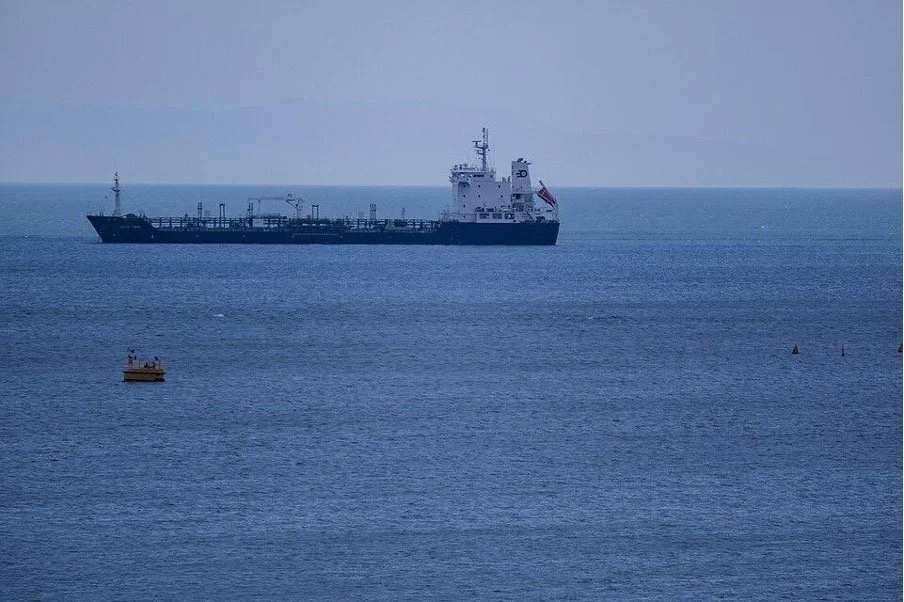
Picture source: https://commons.wikimedia.org/w/index.php?search=%D0%A7%D0%B5%D1%80%D0%BD%D0%BE+%D0%BC%D0%BE%D1%80%D0%B5&title=Special%3AMediaSearch&type=image , via Wikimedia Commons, Author: Mostafameraji
What happens when a war that the European Union has spent years trying to contain begins threatening its own borders? For Bulgaria, this question is no longer hypothetical. In October 2026, a series of drone attacks on merchant vessels in the Black Sea brought the dangers of war alarmingly close to the EU’s territory. Ships were either damaged or completely sank, sailors went missing, and concerns intensified over the security of one of Europe’s most strategically important maritime regions.
Yet the implications of these incidents extend far beyond Bulgaria’s coastline, affecting the security, economic interests, and political responsibilities of the EU. For a region already destabilised by Russia’s military actions, the incidents expose a difficult question for the European Union and NATO: how should Europe respond when threats to its security emerge outside its territorial borders, but directly affect its economic and strategic interests? As the Black Sea becomes an increasingly dangerous trade route and environment for merchant shipping, the distinction between a regional conflict and a broader European safety issue is becoming harder to maintain.
War at the EU’s Maritime Frontier?
Since Russia launched its full-scale invasion of Ukraine in 2022, the Black Sea has become a major stage of military confrontation. Beyond its military significance on the battlefield, the region connects European markets to international trade routes and serves as a vital corridor for Ukrainian agricultural exports. Disruptions to maritime transport therefore have consequences extending well beyond the countries bordering its waters, ultimately posing issues for economic stability and global food security.
For Bulgaria and Romania, both EU and NATO members, this geographical proximity creates immediate vulnerabilities. Their Black Sea coastlines form part of the Union’s external frontier, placing them at the intersection of European economic interests and the expanding security consequences of the war in Ukraine. These vulnerabilities became particularly apparent in October 2026. On 13 October, two merchant vessels were struck by drones near Bulgaria’s coastline, with one sinking and at least eleven crew members reported missing. The incidents formed part of a wider escalation affecting trade in the western Black Sea. However, they cannot be categorised as isolated incidents.
Between 5 and 23 October, as many as eight merchant vessels were struck or involved in drone-related incidents off the Bulgarian and Romanian coast. However, although Russia has been identified as a likely perpetrator, establishing responsibility remains politically and legally significant.
Following the attacks of 13 October, Bulgarian Prime Minister Rumen Radev summoned the Russian envoy Eleonora Mitrofanova, while stressing that, despite suspicions, conclusive evidence was necessary before formally attributing the attacks to Moscow. Adding another layer of uncertainty, Mitrofanova reportedly told Radev that she had received no information from Moscow’s Defence Ministry regarding the latest attacks. Furthermore, she also raised the possibility of a third-party provocation, leaving the question of who was responsible for the strikes unresolved. As such, this ambiguity illustrates perfectly how threats can have immediate consequences even when responsibility for them remains disputed.
Moreover, on 28 October, another container ship was struck and subsequently sank in Bulgaria’s exclusive economic zone (EEZ), with all eighteen crew members rescued. Together, these incidents point to a disturbing deterioration in the security of the Union and of commercial navigation.
Beyond Territorial Waters, Beyond Responsibility?
One of the most important dimensions of the attacks concerns where they occurred. Several incidents took place in the EEZs of Bulgaria and Romania, raising questions about the extent of coastal states’ jurisdiction and the implications for European collective security.
Under the United Nations Convention on the Law of the Sea (UNCLOS), an EEZ can extend up to 200 nautical miles from a country’s coast, although overlapping maritime claims may limit its extent. Within this zone, coastal states possess specific rights over natural resources and certain economic activities. However, an EEZ is not equivalent to territorial waters, and states retain considerably broader sovereignty.
Consequently, an attack against a foreign-flagged merchant vessel within Bulgaria’s EEZ would not automatically constitute an armed attack against the country itself, nor against the EU as a whole. As such, it would not, by itself, trigger NATO’s collective defence mechanism under Article 5. Nevertheless, NATO members can request consultations whenever they consider their territorial integrity, political independence, or security to be threatened. But should the absence of a direct attack on Bulgarian territory justify a cautious diplomatic stance, or should it instead prompt Bulgarian authorities to pursue a more thorough investigation into threats emerging so close to their shores?
The Response of NATO and the EU
The mounting instability has already prompted a swift response from NATO. On 15 October, NATO Secretary General Mark Rutte discussed the current Black Sea situation with Bulgarian and Romanian leaders, emphasising the Alliance’s commitment to strengthening deterrence and defence capabilities along its eastern flank. As the incidents continued, NATO announced further efforts to reinforce deterrence and support for the region through deployments involving maritime patrol aircraft, surveillance systems, drones, and intelligence personnel, while Bulgaria also requested additional combat aircraft. These measures demonstrate NATO’s effort to strengthen regional security without necessarily escalating the conflict into a direct military confrontation with Russia.
However, while NATO remains the principal collective defence organisation for most EU Member States, the attacks also raise questions about the EU’s own safety obligations. The Union possesses instruments extending beyond traditional military defence, including sanctions, joint maritime cooperation, economic regulation, and diplomatic coordination. Nevertheless, the Black Sea incidents demonstrate that economic and military security are interconnected nowadays.
Merchant shipping is essential to European supply chains and instability in the region can affect transport costs, insurance, and international trade, with the escalation already contributing to significantly higher insurance costs for vessels navigating the Black Sea. As a result, the European Parliament has entered the debate, holding Russia responsible for attacking civilians and for escalating its war of aggression against Ukraine, as Russia is the overall driver behind the deteriorating situation in the Black Sea region.
Additionally, some members of the European Parliament (MEPs) called for consideration of an EU naval operation in the Black Sea, reflecting the growing concerns about the Union’s ability to protect maritime security. The MEPs further urged NATO to explore a Black Sea security initiative, building on discussions surrounding the proposed ‘Black Sea Sentry’, while they also emphasised the need for stronger regional cooperation between Bulgaria, Romania, and Türkiye to address the region’s growing challenges.
The Black Sea: A Wake-Up Call for Europe?
The attacks near Bulgaria illustrate how the consequences of Russia’s war against Ukraine are extending into areas of direct concern for the European Union. Although the incidents do not automatically trigger NATO’s collective defence mechanisms, they expose vulnerabilities affecting European trade, maritime security, and regional stability. The responses from NATO and the EU institutions demonstrate that these threats are being taken seriously. Yet surveillance deployments, political declarations, and proposals for naval operations also reveal the difficulty of responding to threats that fall between conventional military aggression and broader security breaches.
For Bulgaria and Romania, the Black Sea is not a distant geopolitical concern, but rather an immediate protection environment. For the EU, on the other hand, it poses a test of whether European defence cooperation can move beyond reacting to crises towards anticipating and preventing them.
As attacks continue to challenge the security of Europe’s maritime frontier, one question remains unresolved: can the EU effectively protect its strategic interests in the Black Sea without becoming more directly involved in the conflict it is trying to contain?