

By: Leonie Elise Prange
Reading time: 4 min
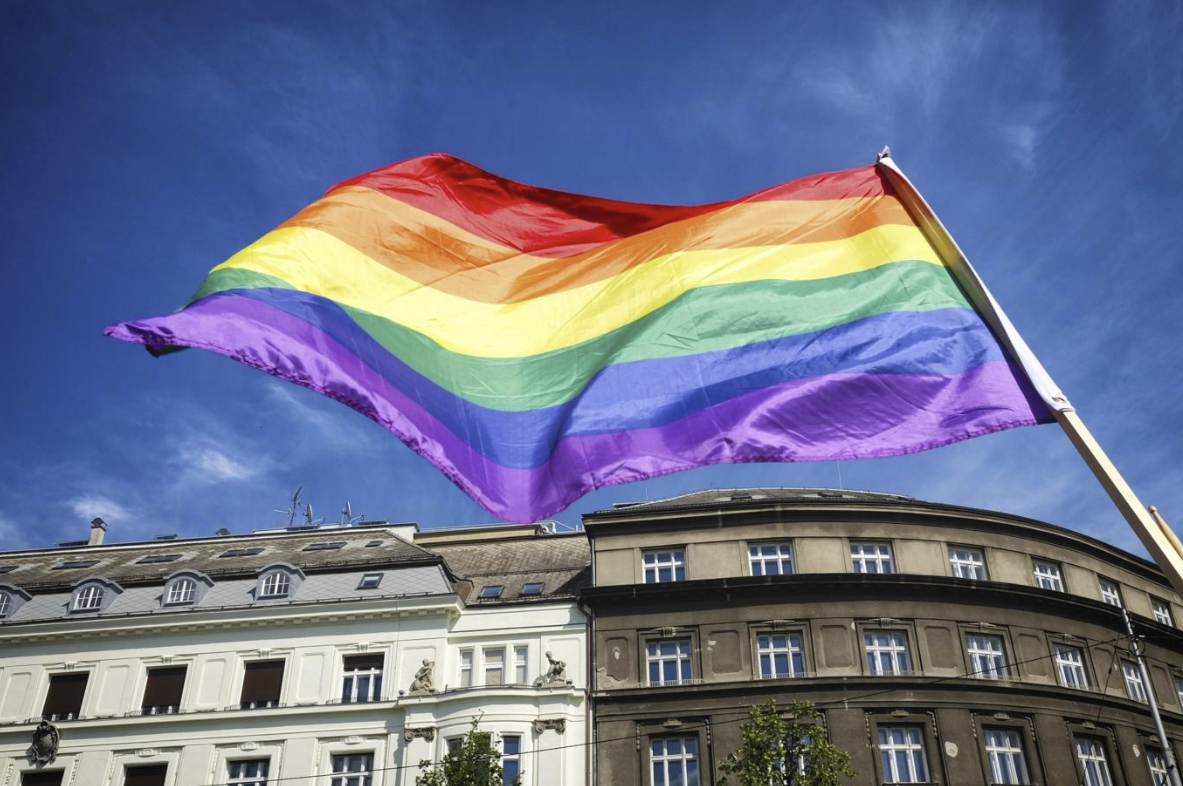
Following a major political shift that ousted Viktor Orbán's long-ruling administration, Hungary’s new leadership has charted a fundamentally different course for civil liberties. With authorities declaring no legal grounds to block the event, Budapest Pride is cleared to move forward, even though the controversial anti-LGBTQ+ legislative framework enacted by the previous government.
Political changes
This decision follows a change of power. In the parliamentary election of April 12, Péter Magyar and his Tisza party won the election with 53.2 percent of the vote, while the Fidesz-KDNP dropped by 15.7 points and fell to 38.4 percent. Resulting in the defeat of the former Hungarian prime minister Viktor Orbán, ending his winning streak that had lasted since 2010.
But Péter Magyar is no outsider to the system he defeated. He was once a member of Orbán’s party Fidesz and held several political offices such as being a diplomat for the party or a seat in the European Parliament, before his change from an Orbán loyalist to his political challenger and joined Tisza after a political scandal regarding his old party in 2024. After joining, he quickly became the party’s leader and quickly gained relevance and political power by winning 30 percent of the votes in the 2024 European election.
During his 2026 election campaign, he openly criticised Orbán’s politics. Magyar focused on domestic policy and restoring a calm relationship between Hungary and the EU, combined with fixing political issues from the Orbán years. But how quickly the new government can repair the system rebuilt by Orbán can be seen as one of the main questions of Magyar’s term.
LGBTQ+ rights restricted step by step
Queer people’s rights were one of the aspects on which that “Orbán” system was most visible. Orbán’s political way against LGTBQ+ rights started in 2020 after his government approved a law that banned same sex adoption. This law allowed adoption only for married couples, making it impossible for Gay or Lesbian couples since same-sex marriage is forbidden in Hungary. Former loopholes for queers to adopt such as single adoption, where only one partner applied were closed as well, by banning adoption for singles. Followed by a so-called child protection law in 2021, resulting in a ban of queer representation on TV and in school. Meaning that TV shows featuring LGBTQ characters or rainbow flags, may only be broadcast after curfew and must be classified as suitable for over-18s, combined with banning queer couples from advertisements. This is followed by a censorship of certain books and pictures in Hungarian schools. Besides this, only individuals and organisations with an official registration are allowed to hold sex education classes in schools, making sure that no sexual orientation is addressed. This law therefore does not allow sharing information with under-18s that the government considers “promoting homosexuality or gender change” to protect their youth from these ideas.
In March 2025, the Hungarian parliament passed legislation banning Pride events by connecting public assemblies with the country's restrictive child protection law. This also allowed authorities the use of facial recognition software, to identify participants and confront them with fines.
The new government under Magyar brought a change within the country’s previous regulations and officially voted to repeal the child protection law from Orbán’s government. The newly passed law removed previous restrictions, such as the portrayal or “promotion” of homosexuality to minors. As a result, the country’s key discriminatory laws were effectively abolished for the time being, and compliance with European Union standards was restored.
A fragile reprieve
While the repeal of the child protection law marked a first step towards more queer rights for the Tisza party and Prime Minister Magyar, remains a questions regarding other LGBTQ+ rights such as gay marriage.
The definition of marriage as a union between a man and a woman remains enshrined in the Civil Code and the Constitution. Furthermore, the Prime Minister has not made any clear statement regarding the Pride parades or whether they will take place next year. The Tisza Party’s two-thirds majority would, in principle, be sufficient to secure the votes needed for a constitutional amendment; however, there has so far been no indication as to whether he intends to do so.
What comes next
Magyar presents himself as a conservative and a pro-European, not a champion of queer rights, and his priorities so far have been repairing relations with Brussels and unlocking frozen EU money. Whether the new government is willing to spend political capital on the issue may become clearer after the parade on 27 June, and after the European Court of Justice rules on the child protection law.