

Are we living in Macron’s Europe?
By: Margaux Baudry
Reading time: 3 minutes
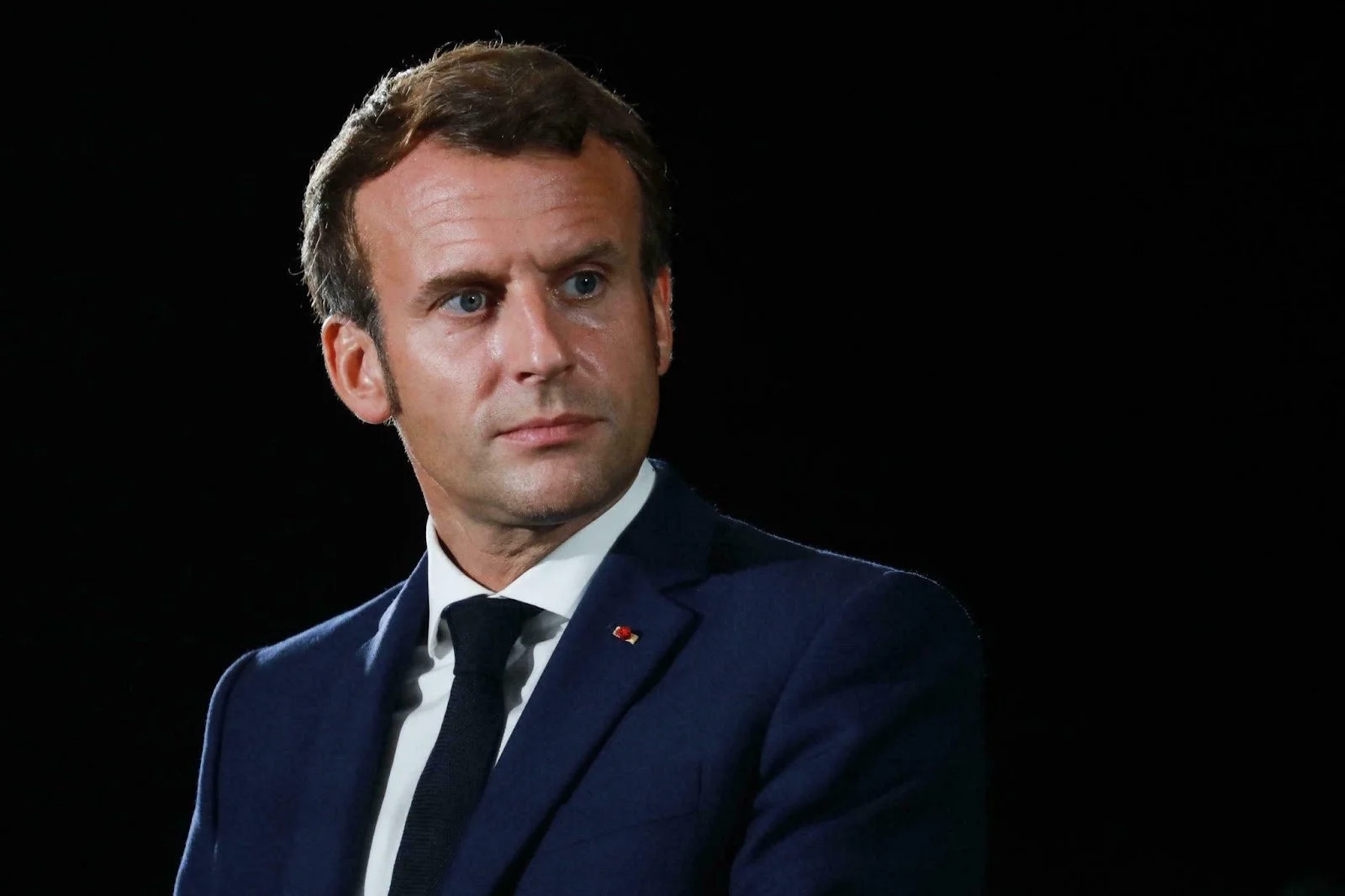
Unless you’ve been living under a rock, chances are you have seen pictures of Macron decked out in Maverick-style sunglasses in Davos. Indeed, his take on the Top Gun look did not go unnoticed at the World Economic Forum, leaving the press (and social media users) wanting more. Whether the craze surrounding this fashion statement was intended or not, it signaled one thing clearly: Macron is leaning into a stronger, more assertive image on the world stage. As he navigates a second Trump term and positions himself as a critical mediator in the Ukraine conflict, a provocative question arises: Is Macron not only the President of France but also of Europe?
Loved or Loathed?
Macron’s European standing contrasts sharply with his domestic approval ratings. Recent Polling Europe Euroscope data suggests that he is the most popular leader across the EU, with 46% of respondents expressing a favorable opinion. The poll even shows him to be ahead of European Commission President Ursula von der Leyen, at 39%.
In France, however, the picture is very different. According to recent Oxada polling, a significant majority of French respondents, (77%) believe he has been (and still is) a bad president. The gap between this European appreciation and domestic dissatisfaction highlights an almost decade-old paradox. The qualities that contribute to Macron’s reputation abroad (technocratic confidence, assertive rhetoric, and diplomatic involvement) often generate criticism in France, where the concerns are economic pressures and social reforms.
Part of Macron’s elevated European profile may also be structural. Indeed, Germany, traditionally the other pillar of EU leadership, has faced political fragmentation and coalition constraints. In this context, Macron appears comparatively decisive and prominent.
Between Washington and Moscow
If Macron has been appreciated more in other countries, it is in part because he has been very active on the international scene. Having already navigated Donald Trump’s first presidency (2016–2020), he built a working, if sometimes theatrical, personal relationship with the American president, as seen with Macron privately addressing Trump as “my friend”. It seems that experience places Macron in a unique role, especially amidst the resurgence of transatlantic tensions on the topic of Greenland.
At the same time, Macron has not entirely abandoned the idea of dialogue with Russia. Since the beginning of the war in Ukraine, most European leaders have chosen to keep a significant distance from Putin. Macron, although heavily criticized at the time, maintained that communication channels should remain open. By late 2025, he again signaled the possibility of renewed dialogue, reinforcing his long-standing belief that diplomacy, even in wartime, should not be ruled out entirely.
Iran War
As France is drawn into the vacuum created by the chaos that broke out following the U.S.-Israeli strikes on Iran on February 28, the president has leaned further into his role as a military leader. The conflict has already seen the death of Iran’s Supreme Leader, Khamenei, retaliatory strikes across the Gulf, and an Iranian drone striking a French naval base.
In response, Macron has traded his Davos aviators for the command deck. In a powerful speech delivered in front of one of France’s ballistic missile submarines at the Île Longue base, he signaled a pivot toward forward deterrence, uttering the defiant words: “To be free, we have to be feared.”
Conclusion
By announcing an increase in France's nuclear arsenal and pushing for deeper defense cooperation with European allies, Macron is positioning France not merely as a mediator but as the indispensable military backbone of a Europe that can no longer rely solely on a volatile Washington. Yet, as the Middle East burns and Ukraine’s future hangs in the balance, a haunting question remains: Can Macron truly project strength across a continent while standing on such fractured ground at home?