

Hungary takes a U-Turn, or not? - Reminiscing the Hungarian Elections 2026
By: Lavinia Tacke
Reading time: 5 minutes
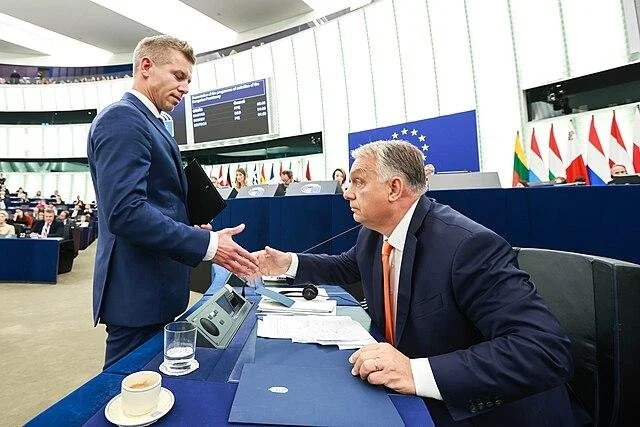
Péter Magyar (left) and Viktor Orbán (right) Source: Wikimedia Commons
Usually, elections in a country with a population of around 9.5 million do not attract much international attention. However, this was totally different regarding the Hungarian elections on April 12th, which, for many, might have felt like the Super Bowl of European politics. Pictures from the parties in Hungary’s capital, Budapest, on the election night illustrate that this was not a “normal” election.
Sunday, April 12th, was the decisive day: a record number of 79.5 percent of the electorate went to the ballots and set an end to the 16 years of Orbán as prime minister. The opposition party Tisza, led by Péter Magyar, won 141 of 199 seats and therefore secured a two-thirds majority in parliament, which is needed to pass constitutional changes. This is “a bigger majority in parliament than Orbán ever had”, explains a young Hungarian interviewee.
The 2026 Hungarian elections - a milestone in the EU’s history?
Many European leaders were probably holding their breath on the election day, since this leadership change could have a tremendous impact on Hungary’s relations with the EU. Under Orbán’s 16-year-long rule, the country has often been a burden to the European Union. As unanimity is needed for decisions in sensitive areas, the veto of one country can block the decision. Hungary has used its veto power especially to protect Russia, for example, by blocking sanctions against Russia and a 90 billion aid loan for Ukraine.
Furthermore, the Fidesz-government had implemented radical laws and reforms in Hungary, steering the country away from European values and liberal democracy. The list of violations of EU law and issues of democratic backsliding is long; let’s have a quick look at what the Orbán-era meant for Hungary.
● Reshaping of the electoral system to Orbán’s benefit
● Restricting press freedom by putting loyalists “in control of an estimated 80 % of Hungary’s media.”
● Restriction of peaceful assembly in light of LGBTQ-parades
● Building of ties with Russia, “a country that has devastated Hungarians for generations”, as a Hungarian interviewee put it.
● Systematic undermining of the rule of law
The new Hungarian prime minister, Magyar, seeks to be much more EU-friendly or at least seems willing to cooperate with the European Union. He has stated that he would like to rebuild trust with the European Union and the NATO alliance during his term. Whether this is because he is interested in unlocking the €17 billion in frozen EU funds or because he is truly keen on strengthening ties with the EU remains a question to be answered. €10 billion of this fund is set to expire in August, which leaves the incoming government with very little time for reform. The funds are coupled with some conditions, including Hungary's obligation to implement checks on corruption and to uphold“the right to asylum and academic freedom”.
However, the upcoming government will face the challenge of many institutions being controlled by Fidez loyalists. Experts warn that European leaders should not wear rose-colored glasses, as describing the newly elected prime minister as a full-on EU-enthusiast might be an exaggeration. In February, his Tisza party published its manifesto, stating that the party does not aim to change Hungary’s current policy of not supporting Ukraine. Also, regarding reducing Hungary’s dependence on Russia, the Party seems less ambitious than the EU might have hoped. According to Tisza's manifesto, Hungary shall reduce its dependence on Russia by 2030, which falls behind the 2027 target proposed by the European Union.
Migration will also remain a topic on which Tisza and Brussels do not align, as the party signaled it will maintain Hungary’s strict migration policy, including opposing the EU’s Migration Pact and relocation quotas, as well as keeping the borders closed.
Péter Magyar - a rising political star or the “less evil.”
The prime minister-to-be, Péter Magyar, has by no means been a long-standing opposition leader. The 44-year old lawyer was once part of the Fidez party himself, but became leader of the centre-right Tisza party in 2024. In the last two years, he managed to establish himself as the most prominent opposition to Orbán.
Magyar’s election campaign was filled with ambitious promises. He announced a “regime change” and proclaimed that he would combat corruption and reverse the strong ties with Russia that were
strengthened during the Orbán-era. Especially, the fight against corruption was a flagship project that made him gain popularity during his campaign.
Furthermore, he promised to dismantle the party-loyal system that the Fidesz-party has established over the last 16 years. During its term, the Orbán government has constrained press freedom and judicial independence by filling positions across public administration, the media, academia, and the judiciary with Fidesz-loyalists, leading to democratic backsliding. Tisza now aims to tackle this issue, which will most likely not be the easiest task in his term, despite his powerful two-thirds majority in parliament.
“A lot of people view him as the only existing alternative to an autocratic regime”, explains the interviewee. Time will show if he can establish himself as a credible leader who actually brings the change he promised. “The nation is hopeful, but we should be sceptical because we got them to power and now we must be able to keep this power in a way which does not turn into what Orbán has done”, the interviewee explains.
Where is Hungary standing now?
The last 16 years did not pass by without leaving a mark on Hungary's society. The interviewee describes that the country remains politically divided and personal relationships continue to be marked by the populist nature of Hungarian politics.
“The growing hatred [against each other] is something that I think is the biggest crime that Orbán has ever committed because he turned Hungarians against Hungarians.”
- The interviewee
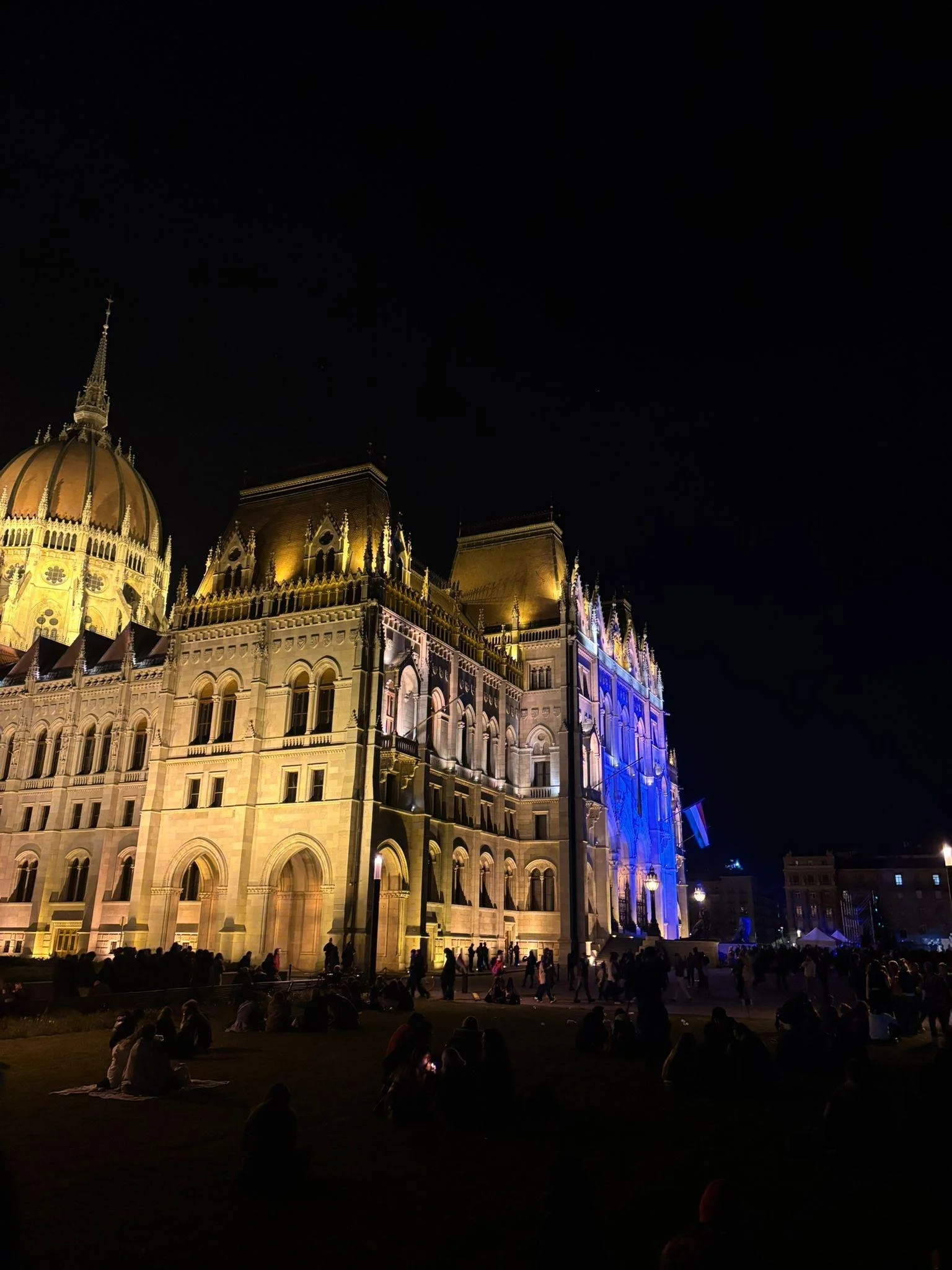
The Hungarian Parliament in the night of the elections source: private picture
The night after the election, “was a moment of euphoria I have never experienced in Hungary before”. This is how an interviewee who was on the streets in Budapest during the election night described the atmosphere. “I have always thought of my nation as kind of depressed and very pessimistic, and the night of the elections, everyone was out, [..] celebrating”, she continues. According to her, this is very unusual in Hungary, especially after the Fidesz government recently prohibited raves. In the night after the elections, a civilian organization organized a techno celebration in front of the parliament as a form of protest, which attracted thousands, if not tens of thousands, of attendees. The night of April 12th marked a significant moment in history, as France 24 describes. Hungarians, especially young Hungarians who have lived almost their entire lives under Orbán's rule, cheered after Orbán conceded defeat.
“We have yet again gotten ourselves into, not a coalition, but a one-sided leadership.”
- The interviewee
The atmosphere in Hungary at the moment reflects this euphoria and the hopes for the future that many share. According to the interviewee, Magyar “is a historic man, who recognized that this is a historic time” and brought Hungary the opportunity for change. However, whether he can deliver this change and fulfill the high expectations and hopes that Hungarians and Europeans have for him remains to be seen.
If you are keen to learn more about Orbanism, this article is worth checking out!