


Zooming In
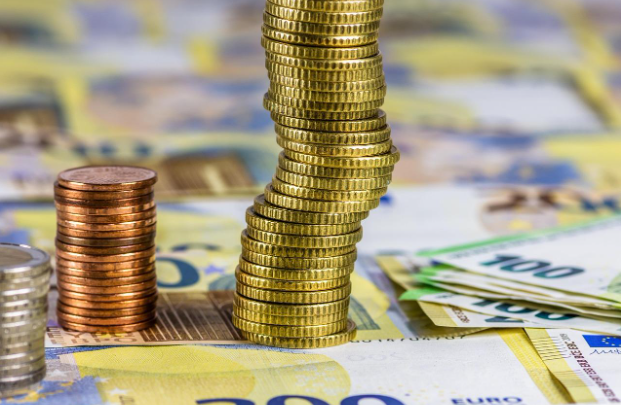
Equal pay in Europe: Where does the Gender Pay Gap stand in 2024?
By Lavinia Tacke, 3 minutes.
The gender pay gap –everybody has heard about it, but what is the current situation in the EU? What is being done to reduce the gap and how does it vary across member states?

Did we forget about climate change?
by: Jolanka Kocianová Vuong
reading time: 3:40 minutes
Extreme weather events have taken news broadcasters by storm! Whether it’s the LA fire, Hurricanes Milton and Helene, or the flooding of Valencia, the trend suggests that these natural disasters will only increase in the coming years. Yet, with all eyes on headlines full of Trump, the extreme right in Europe, or armed conflicts, it seems as if recently the debate about climate change has been relegated to the background. While News agencies should cover a wide array of topics, it is alarming to see that climate change issues only make the news if politicians deny global warming and withdraw from international climate treaties. So why is no one speaking about Climate Change anymore and why does it matter?
France’s Largest Child Abuse Case: How Systemic Failures Enabled a Predator for Decades
By Dori Felber, Read: 2 minutes 46 seconds
Just months after the tragic abuse suffered by Gisèle Pelicot came to light, a former French surgeon, Joel Le Scouarnec, has been accused of raping or sexually abusing 299 victims between 1989 and 2014, making it France’s largest-ever child abuse case.
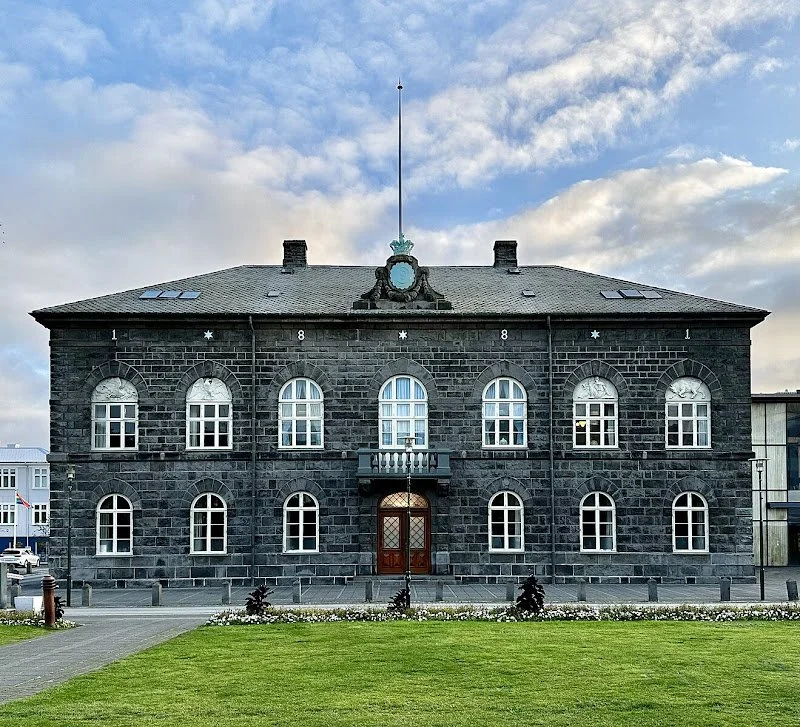
Is Iceland on the road towards EU membership?
By Anna-Magdalena Glockzin, 2 minutes.
In recent years, the EU has become less attractive in many countries, as proven by phenomena such as Brexit and the rise of right-wing populism, whose leaders often employ anti-Union rhetoric. However, other examples show that joining the EU can still be appealing to third countries. In November 2024, the Icelandic population headed to the polls for a snap election. In the election campaign, the issue of EU membership arose as a crucial topic for the first time in years. Polls showed that becoming an EU member state was voters’ preferred alternative, with 45% of the population being in favour and 35% being opposed to it. But what is the reason behind Iceland's latest spike in Euro-Enthusiasm?
The Future of Swedish Gun Control
by Miruna-Antonia Aniculăesei, Read: 2 minutes 27 seconds
"Being confined to a classroom with fear for your own life is a nightmare that no one should have to experience" were the words of Swedish Prime Minister Ulf Kristersson after the tragedy that struck the country on the 4th of February 2025. In the inland city of Örebro, at the Risbergska Campus, where a school for adult education is located, Sweden’s deadliest mass shooting to date occurred, resulting in 10 dead and at least 6 injured. This unfortunate event represented a wake-up call for Swedish authorities, who are now planning on tightening gun control.
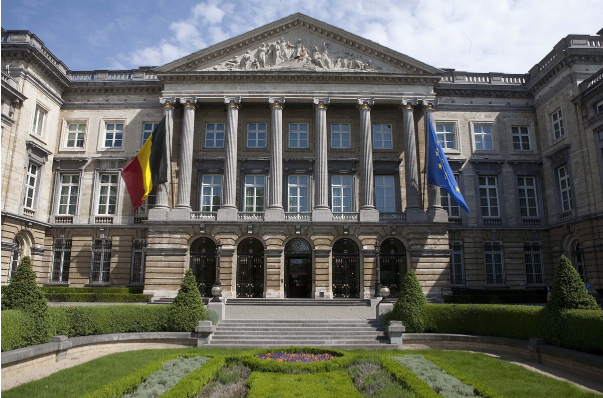
On his Majesty’s Public Service - The new Belgian Prime Minister
By Ben Rosenbaum, Reading Time: 2 minutes, 30 seconds
After months of negotiations and an ultimatum from the King, Belgium has a new government. Its head is Bart de Wever, who ideologically wants the Flemish part of Belgium to become independent but now has to work for the whole country. Where does he come from? And what does his appointment mean for Belgium?
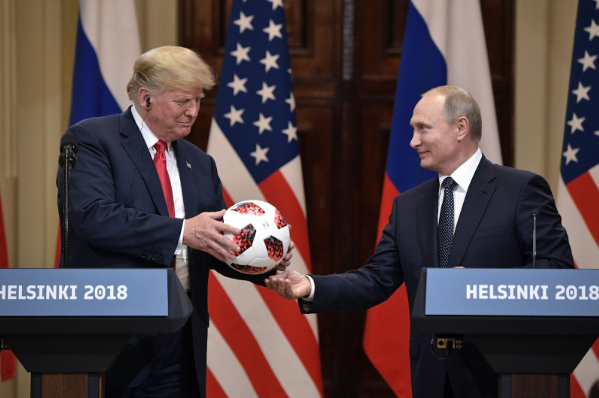
Hi Vladimir, it’s me Donald…
By Anna-Magdalena Glockzin, 4 minutes.
When Neil Armstrong and Buzz Aldrin became the first people to walk on the moon in 1969, then U.S. President Richard Nixon called them from the Oval Office, which marked, according to him, “the most historical telephone call ever made from the White House”. Also, the phone conversation between the then U.S. President Barack Obama and then Iranian President Hassan Rouhani in 2013 went down in history, as it constituted the first instance of communication since 1979 between these two countries. In the last week, there was another phone call made by the current U.S. President, which can be considered historical, although not necessarily with a similar positive connotation.
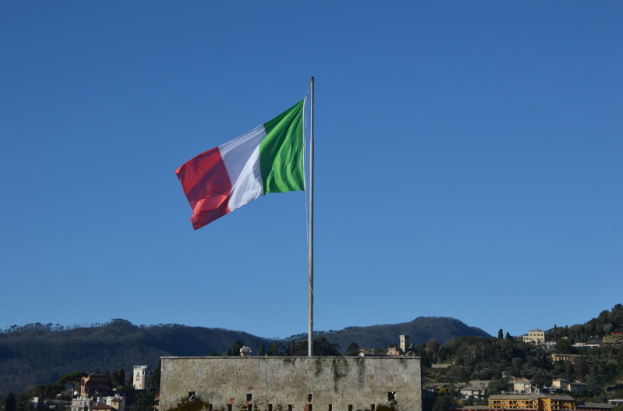
Elmasry’s Release and Other Mysteries: the investigation against Meloni’s failure to act on an ICC mandate
By Flavia Faraone, 3 minute read
On January 27th, Italian Prime Minister Giorgia Meloni announced that she was under investigation for the liberation of Njeim Osama Elmasry, the head of the Libyan judiciary police. Elmasry had been liberated the previous week, under very unconventional circumstances.
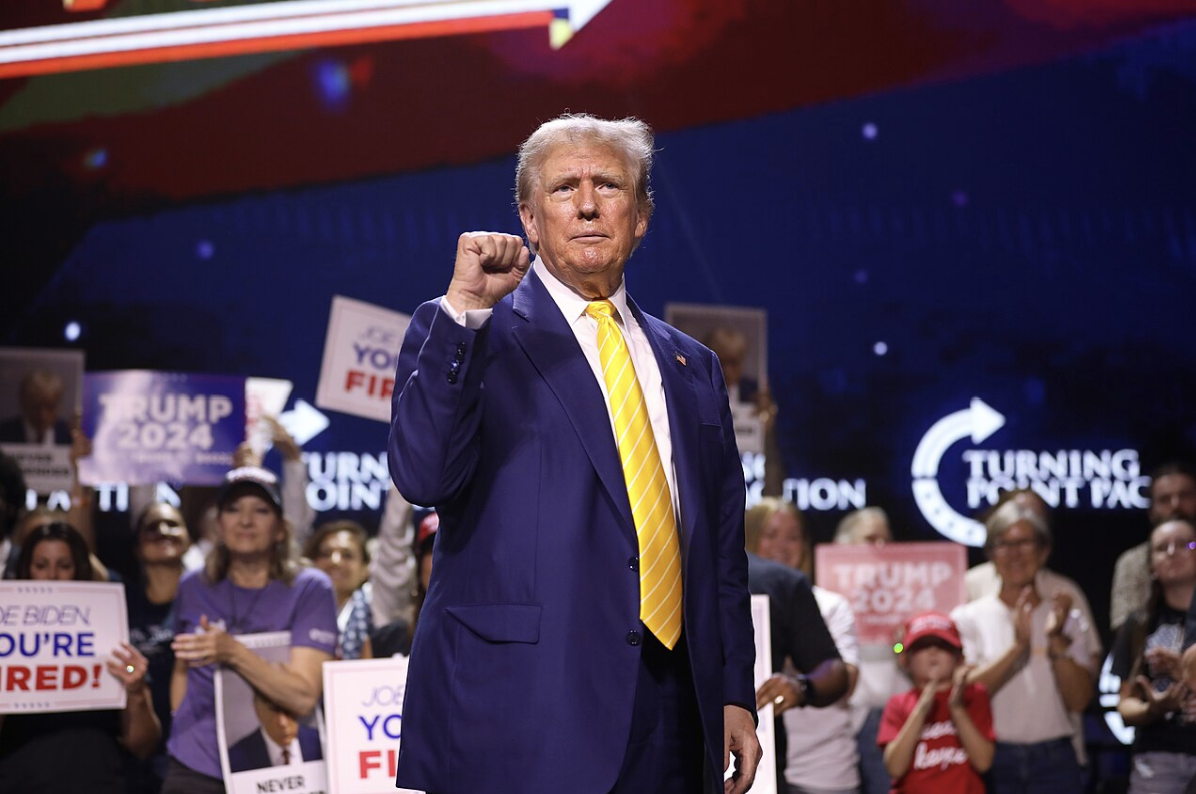
The New Trade War Unleashed by Donald Trump
By Federico Fo, Reading time: 8 min
Immediately after the beginning of his mandate in January 2025, the new president of the United States, Donald Trump, has begun to follow through with the promises made during his electoral campaign, in terms of trade policy. Indeed, Donald Trump announced the introduction of the already planned tariffs that are going to hit some of America’s main trading partners. The latter include Mexico, Canada, China and the EU.
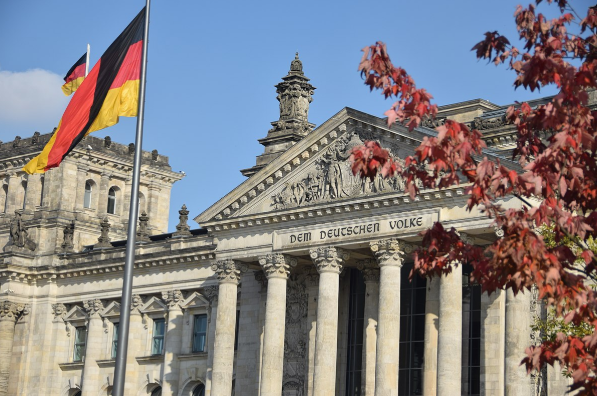
Jamaica, Blackberries, Traffic Lights - A Beginner’s Guide to Coalition Governments in Germany
By Ben Rosenbaum, Reading Time: 4:30 Minutes
With the German Federal Elections coming up, many international observers will be curious as to who will form the next government. But to make this happen, the parties will have to agree on forming a coalition. Germany has a long tradition of coalition governments, and this history provides no shortage of confusing and peculiar names. In this article, I will unpack the potential coalitions, their likelihood after the election and what on earth a traffic light has to do with it.
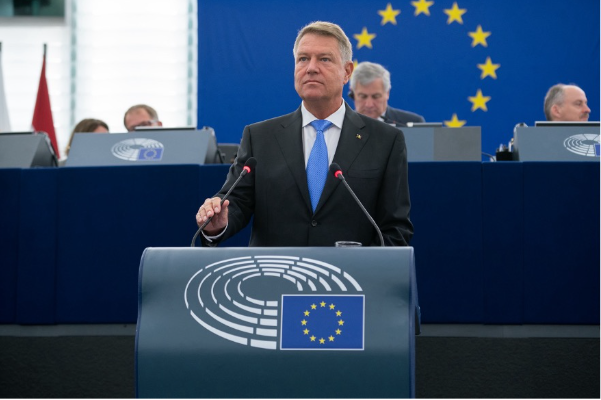
Under Pressure- Romanian President Resigns
By Margaux Baudry, read 1 min 40
On Monday, February 10th, Romanian President Klaus Iohannis resigned after a third request to remove him from office was scheduled to be discussed and voted on in Parliament on Tuesday. The previous two requests, made by opposition parties, had been denied due to procedural reasons. After two mandates and ten years as head of the country, the pro-EU liberal is stepping off the stage like a disgraced comedian—under the spotlight but without the applause. Let’s look at the events that led to his resignation.
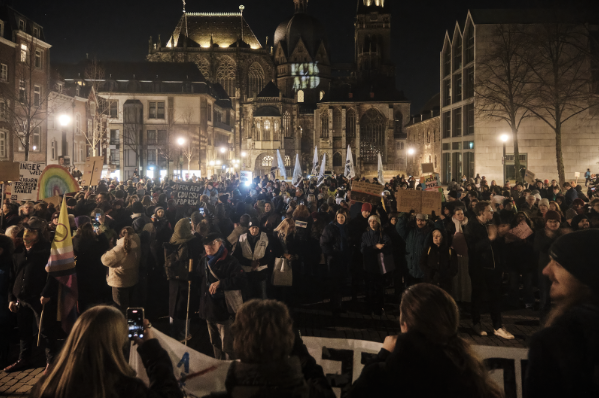
Is there a door in the German “fire wall”?
By Anna-Magdalena Glockzin, 4 minutes.
Since the foundation of the German far-right party Alternative for Germany (AfD) in 2013, there has been a strong consensus among the democratic parties in the German party landscape to hold a so-called “fire wall” (Brandmauer) against them. The concept “fire wall” originally meant that no one works together with the AfD whatsoever. This agreed course of action is grounded in the fact that the AfD is proven to be anti-democratic and in parts right-wing extremist. However, with the rise of the AfD and the shift to the right of the Christian Democrats (CDU), it does not seem to be so clear anymore what the concept entails. One person responsible for that is Friedrich Merz, the CDU’s chancellor candidate. He proposed a five-point plan on migration policy, which passed the German Bundestag with the help of the AfD on 29th of January, causing a massive backlash and heavy discussions in the parliament as well as throughout Germany. But first things first.
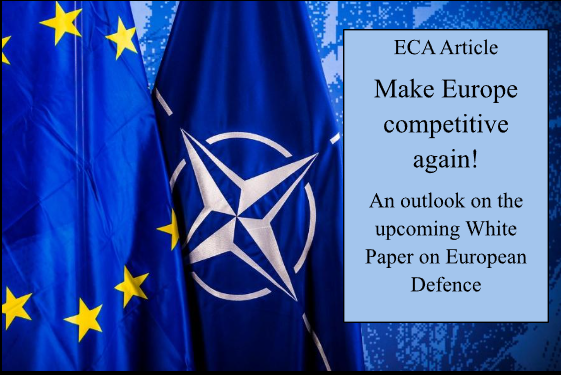
Make Europe competitive again
Kristoffer Saetre Reading time 4 min
“We need to spend more, spend better, spend together” (Ursula Von der Leyen POLITICAL GUIDELINES 2024−2029). For the first time ever, the EU will publish a White Paper on European Defence. Tailored to European investment needs, this Paper promises a response to the EU’s challenges at its borders and in Ukraine. Not surprisingly, the defence industry and Academia have already issued their viewpoints. This begs the question: what can we expect from this Paper and how do national defence policies fit within an integrated defence of Europe?
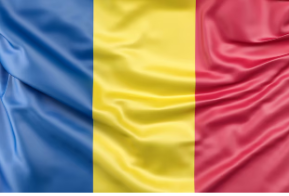
To elect or not to elect? The Romanian Situation
Reading time: 2 minutes, 49 seconds
After the Constitutional Court of Romania cancelled the second round of the Presidential elections, the newly formed government had to decide upon a new electoral season. The cancellation sparked strong reactions throughout the country, in the form of protests, new candidates and even a confrontation with the Bucharest Court of Appeal.
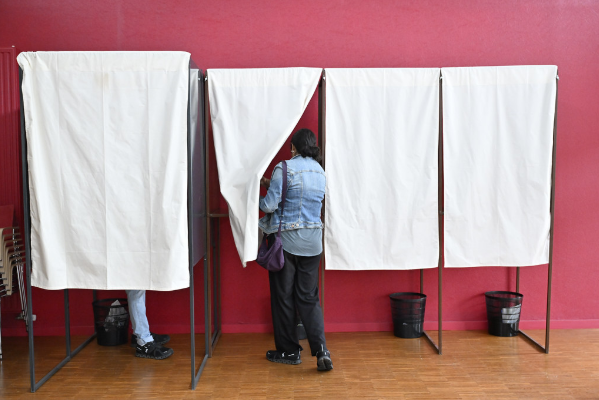
The crisis of incumbency - Part 1
By Ben Rosenbaum, Reading time: 3 minutes, 30 seconds
Recent elections across the world have seen incumbent governments in several democratic countries lose power. Is this a trend or a coincidence? And what might be the reasons?
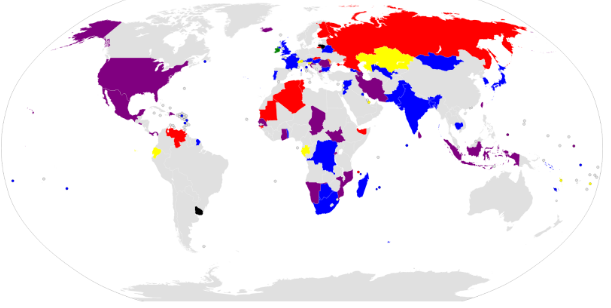
The crisis of incumbency - Part 2
By Ben Rosenbaum, Reading time: 3 minutes, 30 seconds
Why have so many governments struggled in recent elections, and why are populists’ extreme messages so successful? Problems with communication and narratives might be part of the answer.
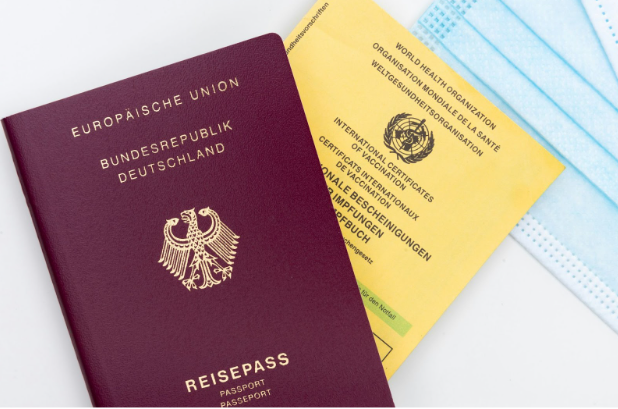
The end of Schengen? What border controls could mean for Europeans
by Flavia Faraone, 2 minutes read
On November 13th, the Dutch government announced that it would strengthen border controls with its neighboring countries, Belgium and Germany. The restrictions will be put into force on December 9th and will remain in place for the following six months at least. The controls will be carried out in order to limit migrants’ access to the country. The three countries are all part of the Schengen area, which t guarantees free movement of people and goods and which involves almost all of the European Union member States.
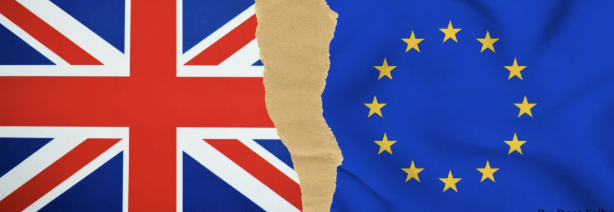
It is Five Years Later: The Aftermath of Brexit
By Dori Felber, Read: 3 Minutes
Five years ago, on 31 January 2020, the UK left the European Union. Such a decision was mixed with varying emotions. Of course, there was the large part of the population that felt triumphed by their newlyfound independence, however, on the otherside, the decision was met with sorrow.
Before the vote, Britain made an array of promises, all which would come true if Brexit comes to realisation. However, were those promises really kept? And what has been the true impact of Brexit on Britain?
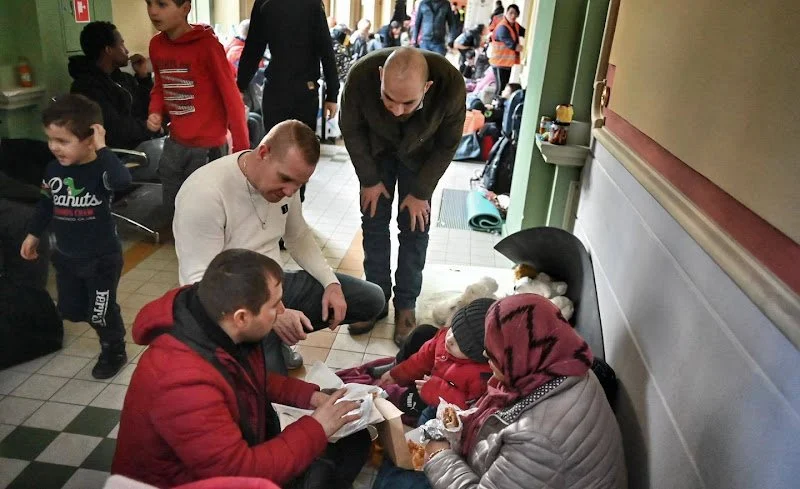
Not welcome anymore? Ukrainian refugees in Poland
By Anna-Magdalena Glockzin, 3 minutes.
Since Russia invaded Ukraine in February 2022, more than 6 million Ukrainians left the country because of the war. More than 1 million of them are seeking shelter in the neighbouring country of Poland, which is among the most vocal supporters for Ukraine. However, the relationship between Polish people and Ukrainian refugees became more complex over time. But more on that later, first the most recent developments.
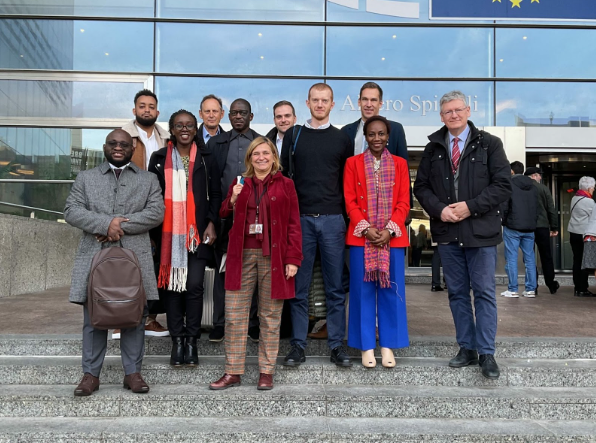
Interview Jamie Slater, European Centre for Development Policy Management
By: Lisa Schipperijn
Would you like a career in European affairs, but not directly in an EU institution? Maybe a career in research is something for you! Blue&yellow journalist Lisa got the chance to speak with Jamie Slater, a junior policy officer at the European Centre for Development Policy, to discuss his work and career trajectory.